Gothic 2001 Review: Why This Cult RPG Still Feels Alive
Okay, so Gothic (from 2001) is this RPG by Piranha Bytes that people either adore or just don’t get. Some fans think it’s amazing, others make fun of it, but anyone who really got into it back in the day remembers it pretty well.
Before I get into it, I gotta say something personal.
I know at least one person reading this is a Gothic fanatic—someone who thinks it’s more than just a game, like a treasure. I get it. For a long time, Gothic was my favorite. I bet I finished it over 30 times, playing it again and again each year. I knew the map like my own town, remembered all the missions, and could tell you the story by heart.
Back then, I thought anyone who didn’t like Gothic just didn’t get it. I knew it wasn’t perfect, but the good stuff made up for any problems.
My opinion changed when I played another game by Piranha Bytes: Risen. What surprised me wasn’t that I didn’t like it, but why. Risen is basically Gothic 1 and 2 mashed together. It’s very similar.
So, why did I love Gothic so much but not care about Risen?
After reading some bad reviews and thinking about it, I realized Gothic was one of the first games I really got into. And, you know, you always remember your first. What you like as a kid sticks with you, and nostalgia can make things seem better than they are.
Now that I’ve said that, let’s talk about the game.
Just like Gothic created lasting memories for many, you can find other incredible solo journeys among the Best Single Player PC Games 2026: 5 Must-Play Titles for Every Gamer.
Table of Contents
What Gothic Is (Basically)
Gothic came out in 2001 for Windows. It’s an RPG made in Germany by Piranha Bytes and published by Egmont Interactive. It starts with a pretty typical story: humans fighting orcs.
Nothing too special there.
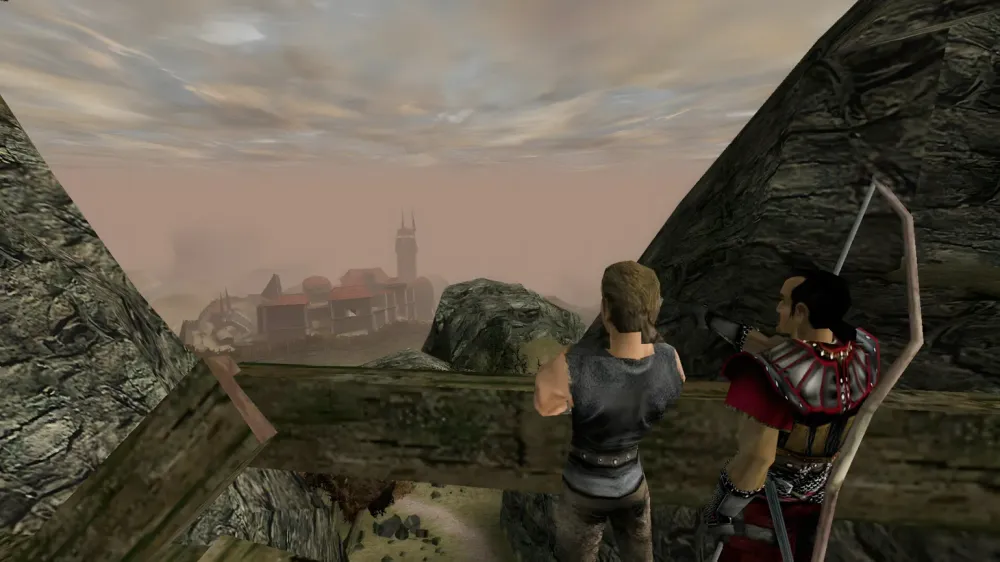
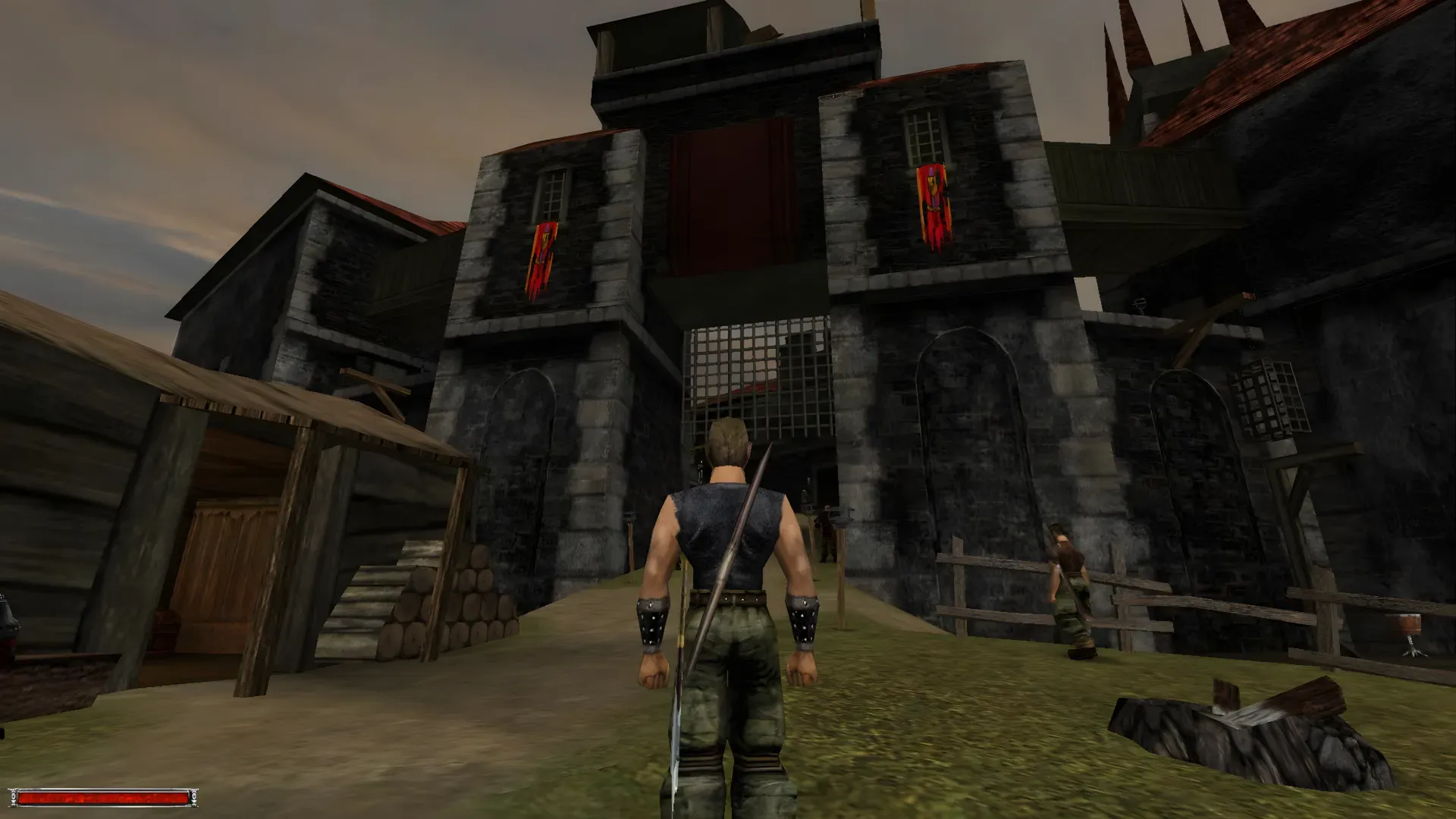
The cool part is why they’re fighting: magical ore. It’s mined in a prison colony. They throw criminals into the mines to get it. To keep them from getting out, they build a magical wall—easy to get in, but you die if you try to leave.
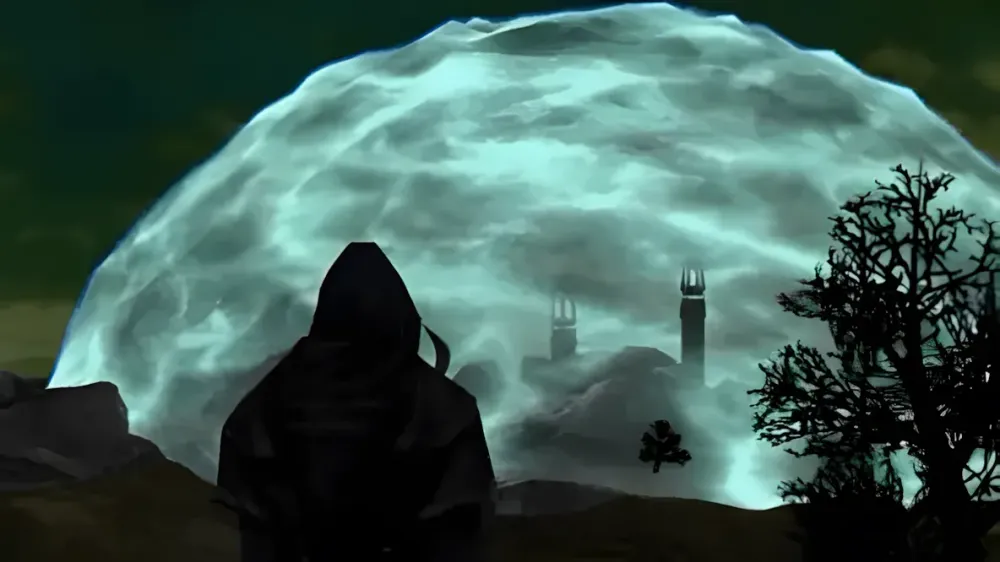
Of course, the controlled wall idea goes wrong. It gets bigger than planned, trapping the mines, the land around it, and the guards and wizards inside.
Then things get crazy. The prisoners take over, kill the guards, grab the ore, and hold the kingdom for ransom. The king still needs the ore, so he makes a deal: the colony sends ore, and the outside world sends food,fancy stuff, and whatever else the prisoners want.
And the wagons keep coming. They keep throwing new criminals in there too.
You’re one of them.
The Guy with No Name
The main character doesn’t have a name, which is famous. Every time he tries to say it, someone stops him because they don’t care or because names don’t matter. People usually think it’s to help you get into the game more.
But to me? It always seemed like a cheap trick. Like it was trying to be deep.
Story: Six Parts, One Goal
The main story is simple: get out of the wall. The game is split into six parts. It’s kinda rare for open-world RPGs to do that, even today, for reasons that will make sense later when I talk about how the game is made.
Part 1: The Colony, Explained
This part is like a tour. You see how things work, and then you pick who you’re going to side with.
There are three groups:
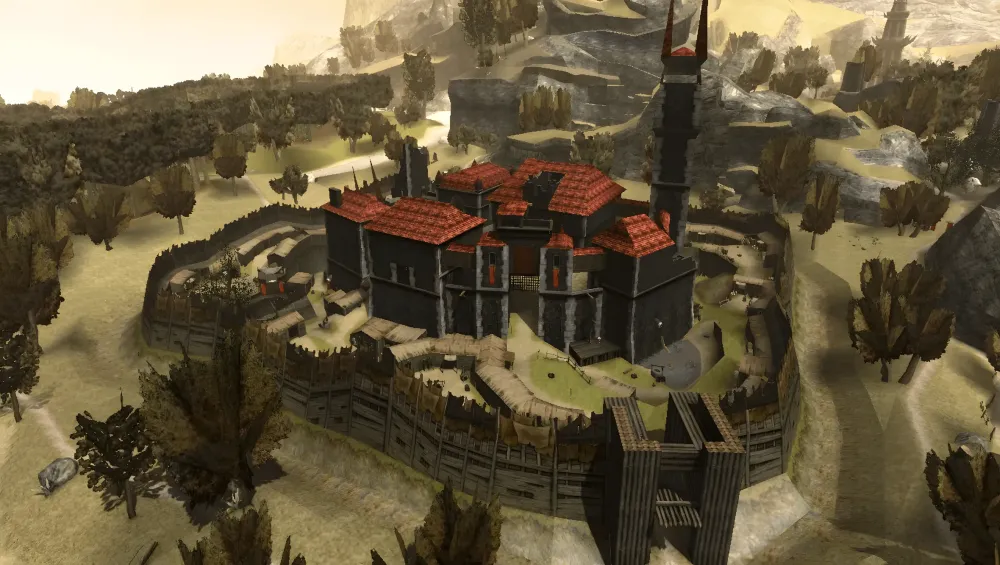
- Old Camp: the biggest, most powerful group. They trade with the outside world—ore for stuff. Fire wizards live here too. They helped make the wall.
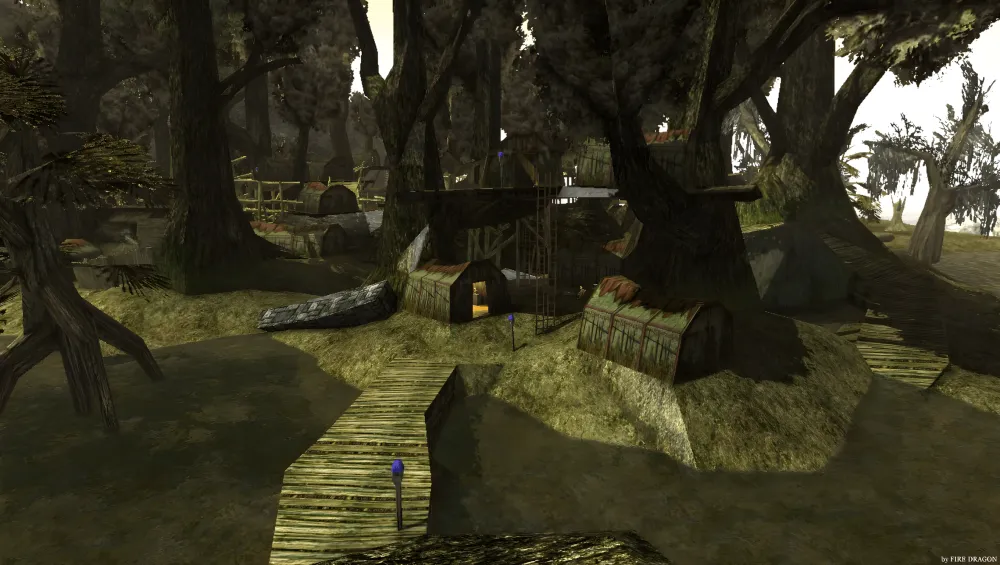
- Swamp Camp: religious people who believe in the Sleeper, who they think will save them.
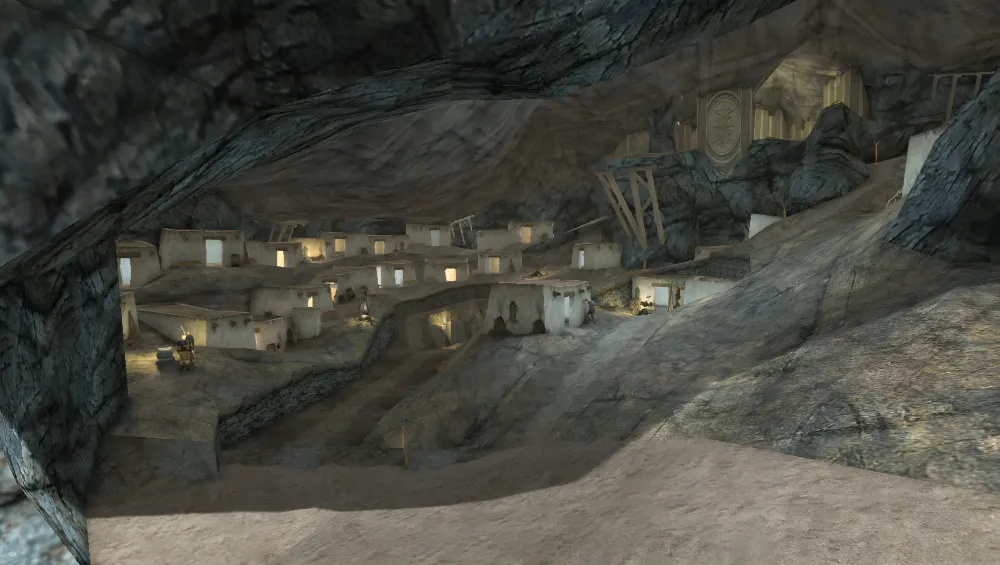
- New Camp: rebels who didn’t like the Old Camp or the Swamp Camp. Water wizards live here too. They also helped make the wall.
Each group has a plan to get out:
- New Camp is collecting ore to blast the wall with magic.
- Swamp Camp is doing a ceremony to wake up the Sleeper, hoping for a miracle.
Join a group, follow the story, and you’ll end up at the Swamp Camp’s ceremony, which takes you to Part 2.
Part 2: The Ceremony and the Crawlers
This part is all about getting stuff for the ceremony, especially going into a mine full of Crawlers. These spider things live in the Old Camp’s mine. You need their spit (and the eggs from their queen) to make a special potion.
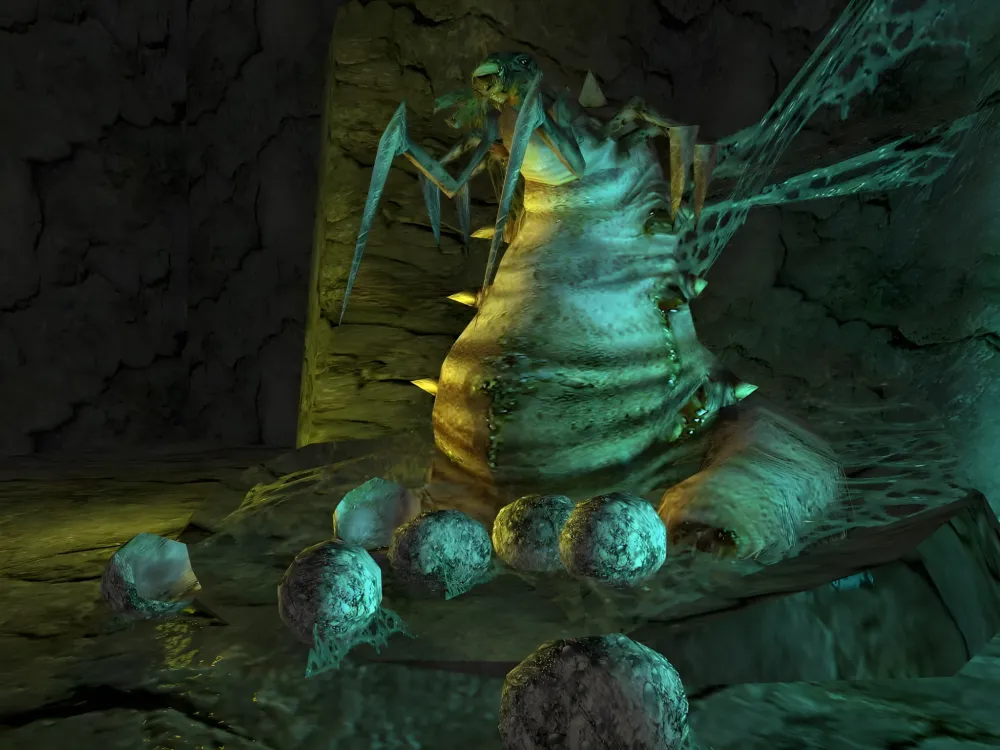
You clear out the nest. You do the tasks. The ceremony starts.
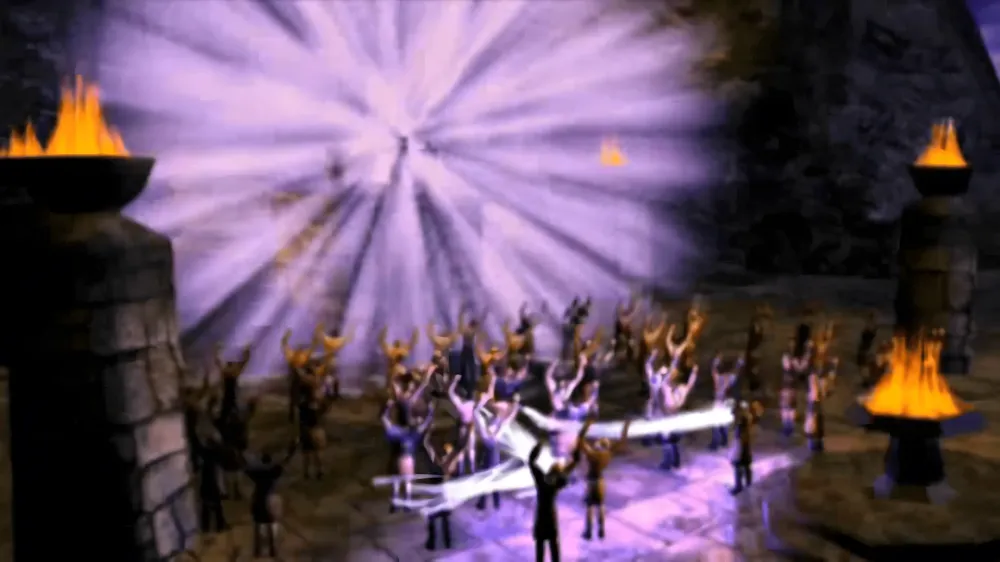
And—of course—everything goes wrong.
The Sleeper isn’t a good god. It’s a demon. A fake. The Swamp Camp’s plan fails, and you have to go to the Water Wizards to help with the ore-blast plan.
Part 3: The Hunt for Old Stuff
Basically, you go on a scavenger hunt. You have to find old things that were used to make the wall. They give you a map. Then you just run to each spot until you have everything.
You travel, you find stuff, you repeat.
Part 4: The Game Changes
The Water Wizards need all twelve wizards who were part of making the wall. You go to the Fire Wizards in the Old Camp.
But they’re all dead. Gomez, the boss of the camp, had them killed.
The reason is simple: a mine collapsed, which means less ore. Less ore means less trade. Less trade means Gomez loses power. So he tries to take the New Camp’s mine. The Fire Wizards say no, and Gomez kills them.
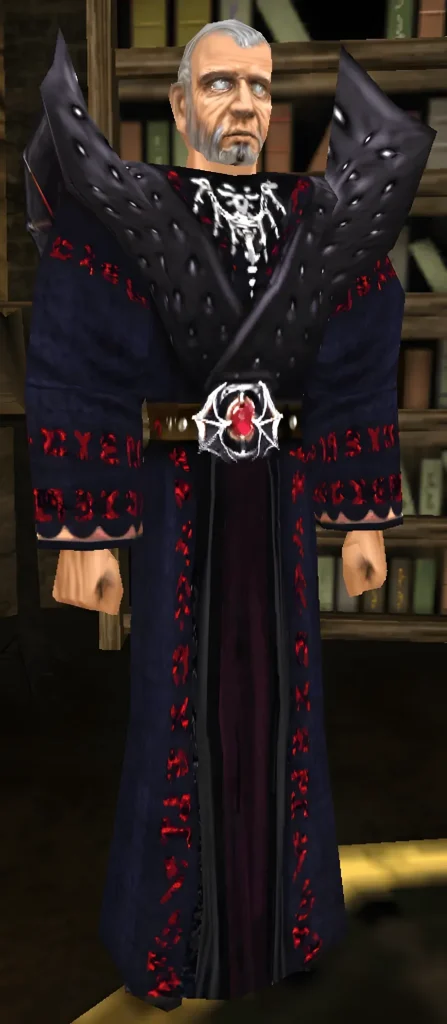
Since the Fire Wizards are gone, the Water Wizards tell you about one more wizard: Xardas.
Xardas Knows What’s Really Going On
Xardas is the key to this part. He tells you the ore-blast plan won’t work. The real way out is with the orcs and their land near his tower.
To get in, you need help from an orc who was kicked out. He’s hiding in some old buildings. You save him, and he tells you the truth: five orc wizards brought the demon here, and it stole their hearts and turned them into zombies.
The Sleeper’s temple is under the orc town. To get through without being killed, you need a symbol that the orcs respect: ULU-MULU. To get it, you have to hunt for more stuff (animal parts from different places).
The game tries to make it easier by giving you teleport stones—Swamp Camp, New Camp, Xardas’ tower, and Old Camp later on—but you still spend a lot of time running around.
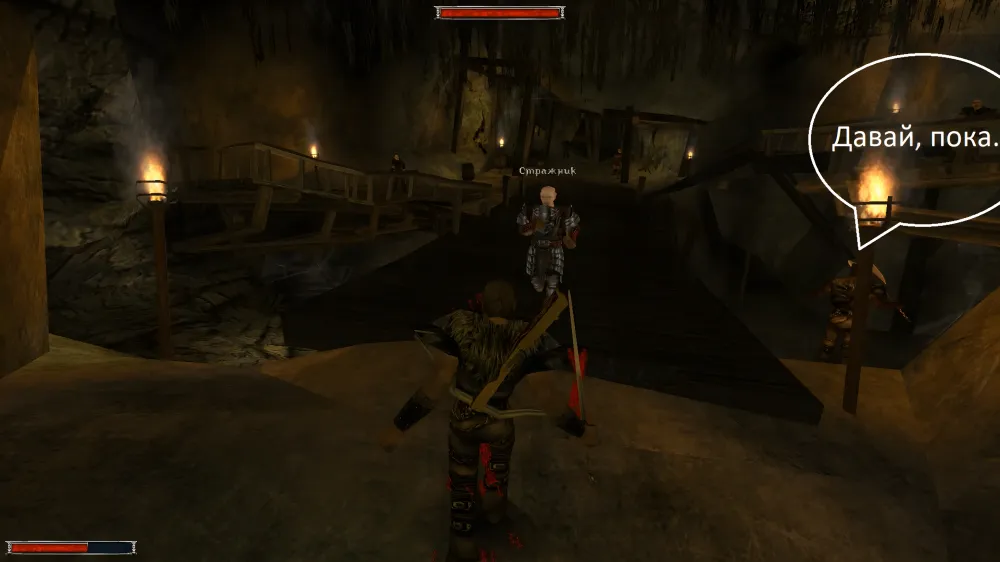
You also help the New Camp fight off an attack from the Old Camp. But the battle usually ends up with you doing all the work because the people helping you aren’t that smart. One of them might even get stuck in a hole and just stay there.
Eventually, you go into orc land, which starts Part 5.
Part 5: The Temple, the Zombies, and URIZEL
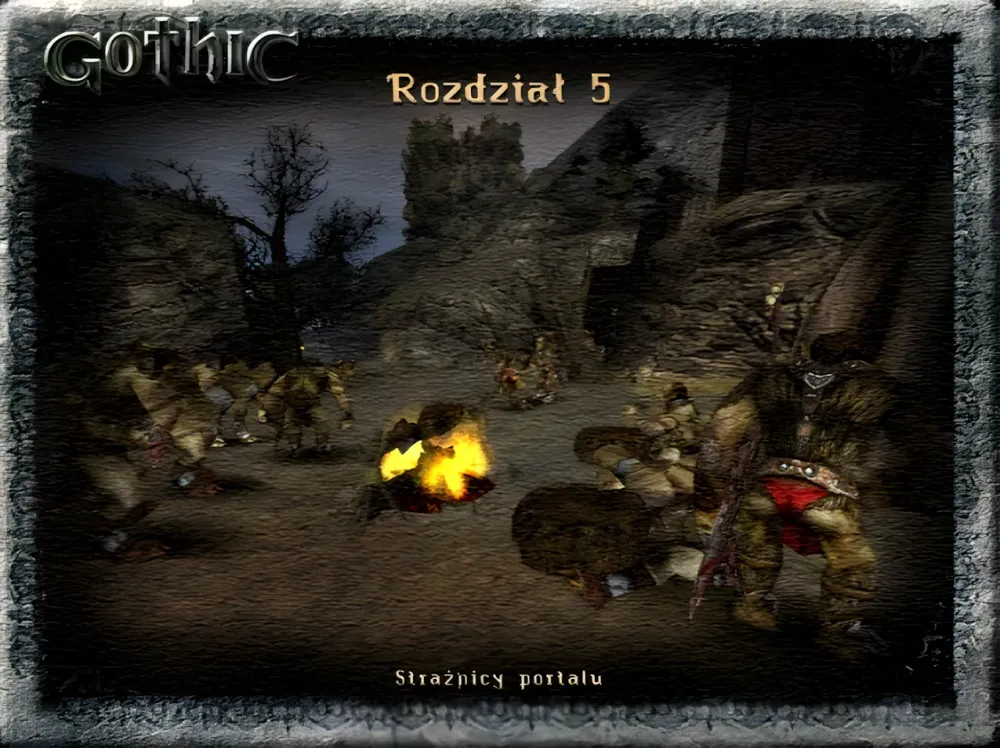
Inside the Sleeper’s temple, you fight a bunch of zombies and the five wizards who are now slaves of the demon.
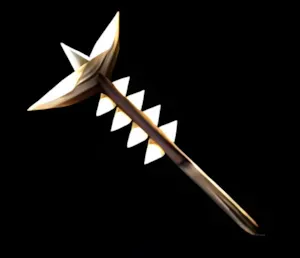
Deep inside, you find a sword: URIZEL.
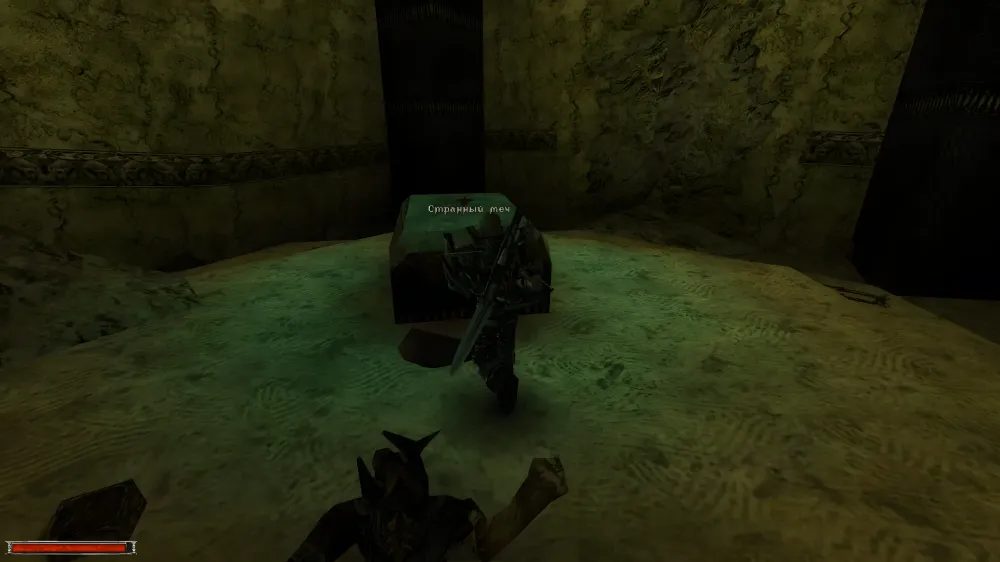
But when you fight the last wizard, your attacks don’t do anything. You have to run. You take the sword to Xardas, who tells you it’s a special weapon from a story, and you’re the chosen one from that story.
URIZEL isn’t working right now. Xardas can fix it, but first you need to get a set of old ore armor from his tower that’s now underwater. You also get a way to teleport into the Old Camp to get revenge.
When you get back, the spell is ready, but URIZEL needs a lot of power. You can get it from the New Camp’s ore that they were going to use to blast the wall.
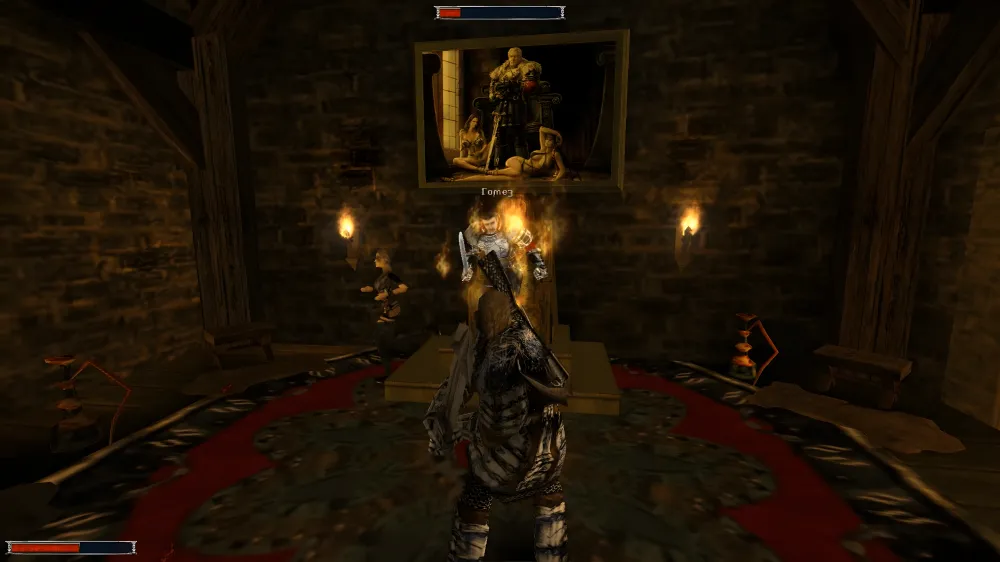
Without telling the Water Wizards, you and Milten, the only Fire Wizard left, take the power and run. Of course, the Water Wizards aren’t happy because you ruined their plan.
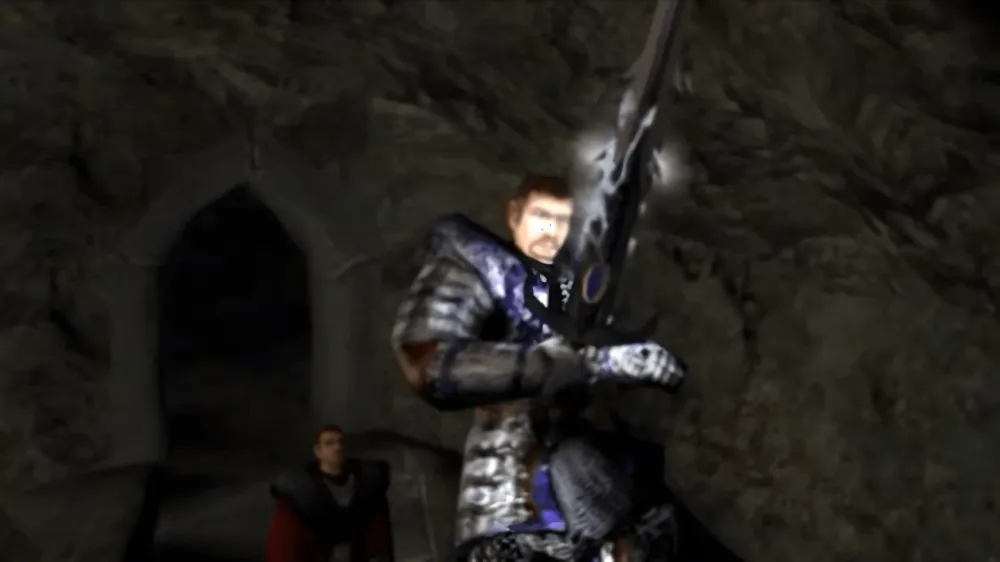
Part 6: Five Hearts and the End
The last part is short and simple.
Put on the ore armor. Take URIZEL. Go back into the temple. Kill the rest of the bad guys, including the people from the Swamp Camp who went into the temple after the ceremony failed.
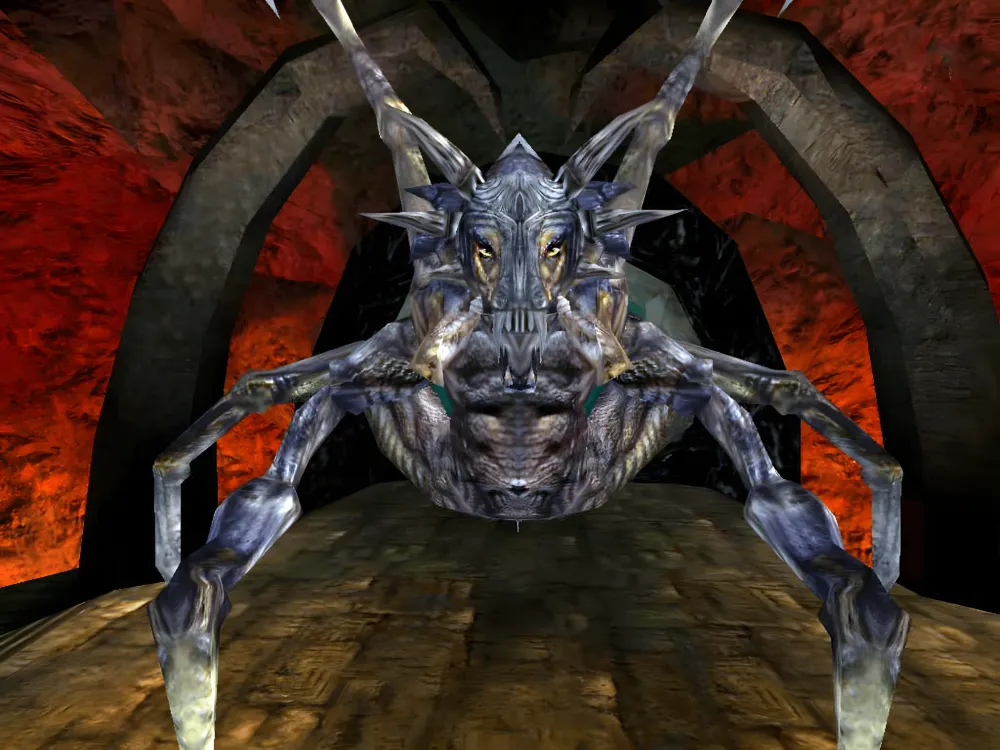
You reach the Sleeper.
You stab the five stolen hearts.
The demon is gone. The wall breaks. The end.
The Game Looks Simple
One good thing about Gothic is the way it looks on the screen. It’s very simple. You have a health bar, and that’s about it. Mana shows up when you check your inventory or get ready to cast a spell.
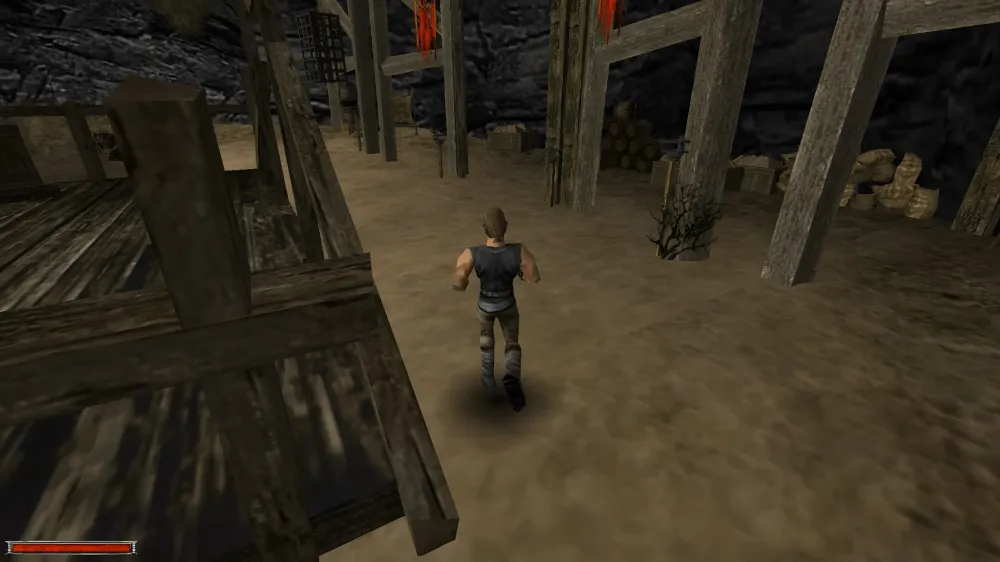
It looks clean compared to other games that have too many icons.
Your inventory is also simple: a row of icons with different categories. You can carry as much as you want, which means you can collect a ton of stuff.
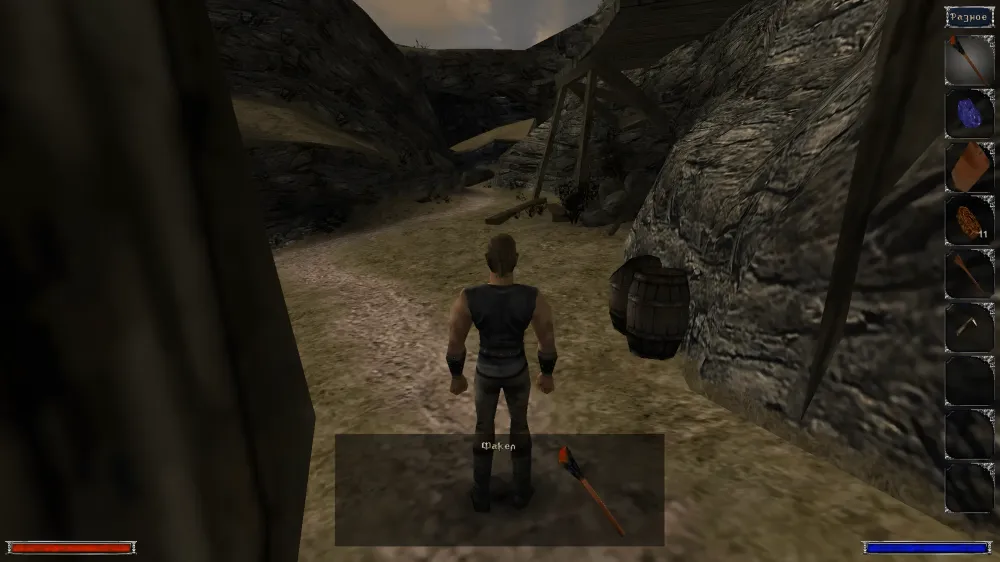
You also have:
- a window that shows your stats (strength, skills, level)
- a journal that tells you about your missions (what you’re doing, what you finished, what you failed) and information about stores and trainers.
It’s simple, functional, and doesn’t try to be fancy.
The Controls Suck
Moving around is fine, but trying to do anything is hard.
To do something in Gothic, you have to hold the target button (usually Ctrl) and press a direction. Picking up an item? Ctrl + forward. Fighting? Ctrl + left or right. Trading? Same thing.
Once you learn it, it’s easy.
But learning it is a pain. The game doesn’t really teach you. There’s no tutorial. New players can spend hours just trying to figure out how to pick up a rock.
Being difficult is one thing, but making things hard to use is another. If the challenge is that the player can’t understand the controls, that’s bad.
Some people say the controls are like that because the game was made for consoles. I’ve heard that a lot, but I’ve never seen any proof. It’s just a guess.
Combat: Interesting, Clumsy, Sometimes Great
Fighting is also weird because of the controls. It feels clumsy until you get used to it.
There are three ways to fight:
- Melee (one-handed and two-handed weapons)
- Ranged (bows and crossbows)
- Magic
Better Melee Skills Mean Better Moves
When you train with one-handed or two-handed weapons, you don’t just get better stats. Your character changes how they stand and attack. After training, you can do combos instead of just swinging wildly.
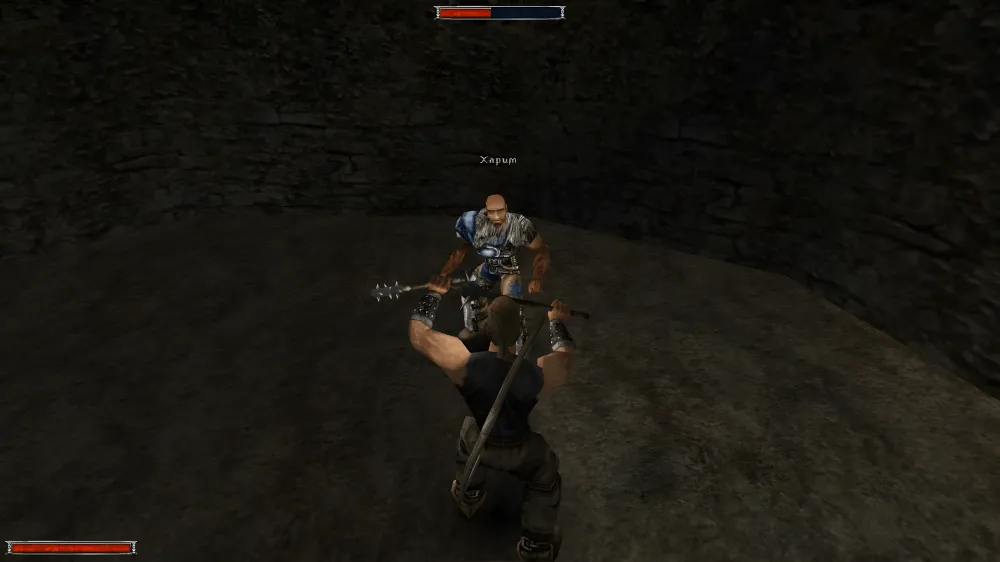
For a game from 2001, that’s pretty cool.
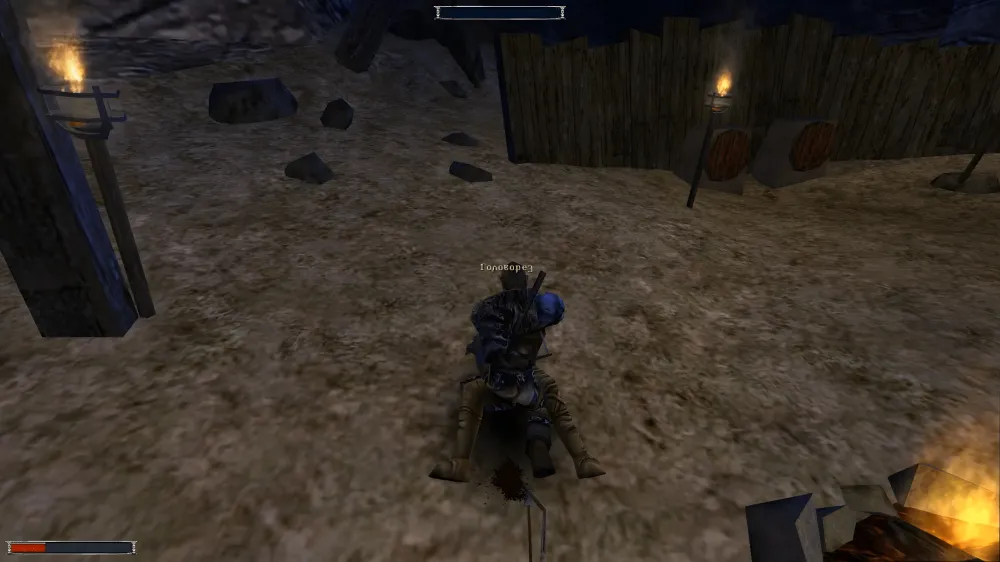
Melee is mostly single-target: you only attack who you’re targeting. If you swing your sword and hit someone else, it doesn’t count. This makes fighting groups feel limited and weird, but it does make it feel a bit more real.
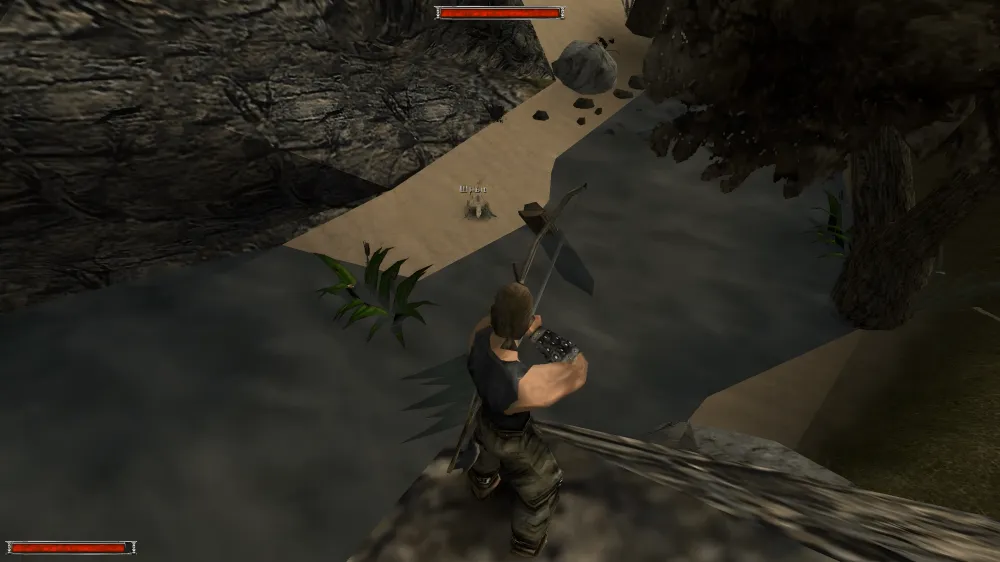
Ranged combat can hit targets between you and who you’re aiming at. But it has its own problems:
- you can’t move while shooting
- if you get hit, you stop shooting
- you can stop switching weapons too
So, if enemies get close, archery isn’t great. It works, but it’s not easy.
Knocking Down People
NPCs sometimes fall when you beat them instead of dying. To finish them off, you have to do a special animation with your weapon. It looks cool, but it can be annoying in a big fight.
Strength Is Important
Strength makes your melee attacks stronger and lets you use better weapons. If you have high strength, even bad weapons can hurt a lot.
Magic: Powerful, but Annoying
You can use magic with scrolls and runes:
- Scrolls are one-time use and don’t need any skill.
- Runes are permanent and tied to six levels of magic. You need to train to use them.
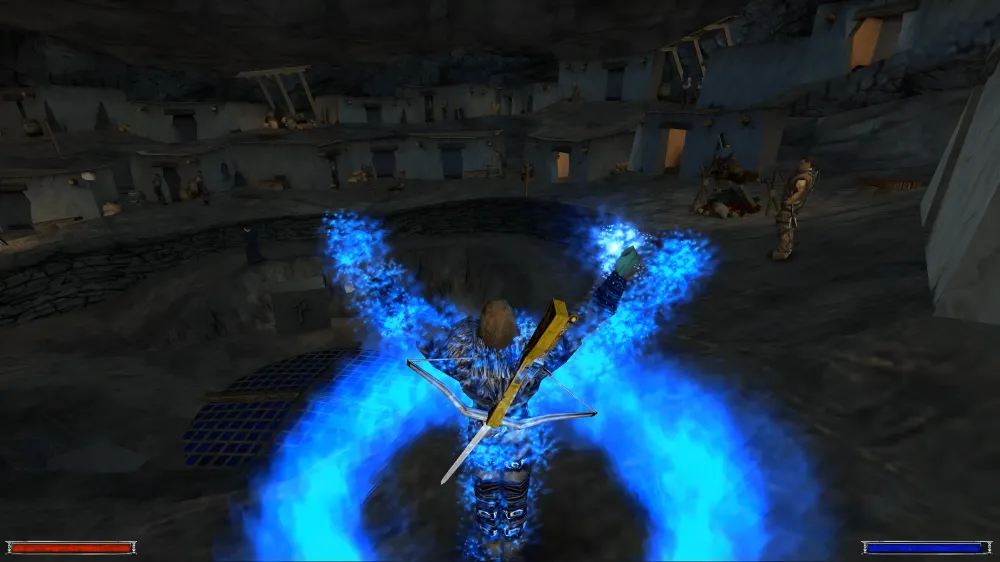
There are a lot of different spells: fireballs, freezes, area attacks, transformations, utility spells, and necromancy.
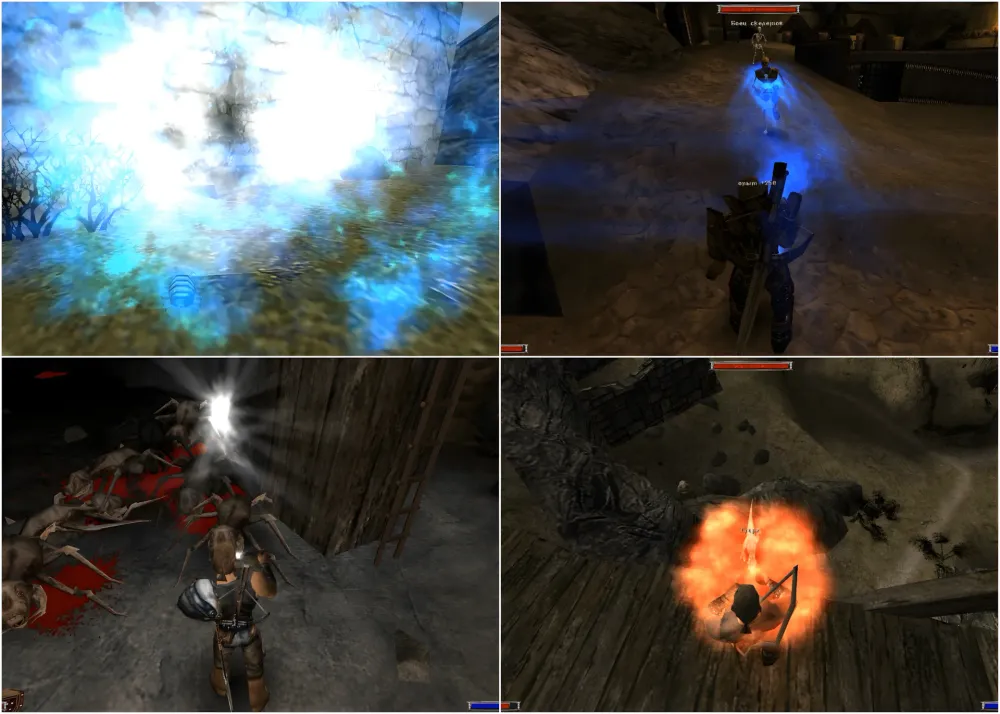
In theory, a wizard should be scary.
But the same thing that hurts archers hurts wizards: if you get hit, you stop casting. It also takes a long time to switch runes. Fighting groups usually means you have to climb somewhere they can’t reach and cast spells from there.
That’s not strategic depth. That’s just being awkward.
Also, you can’t really play as a wizard until later in the game starting at Part 2. You can use weapons early, but magic takes time.
Healing: Three Ways, One Problem
You can heal with:
- magic
- items
- sleep (not in combat)
Magic is easy to use quickly. Items aren’t. You have to open your inventory, pick the item, and use it while enemies are attacking. Even worse, opening your inventory makes you put away your weapon, and you can get hit while trying to get it back out.
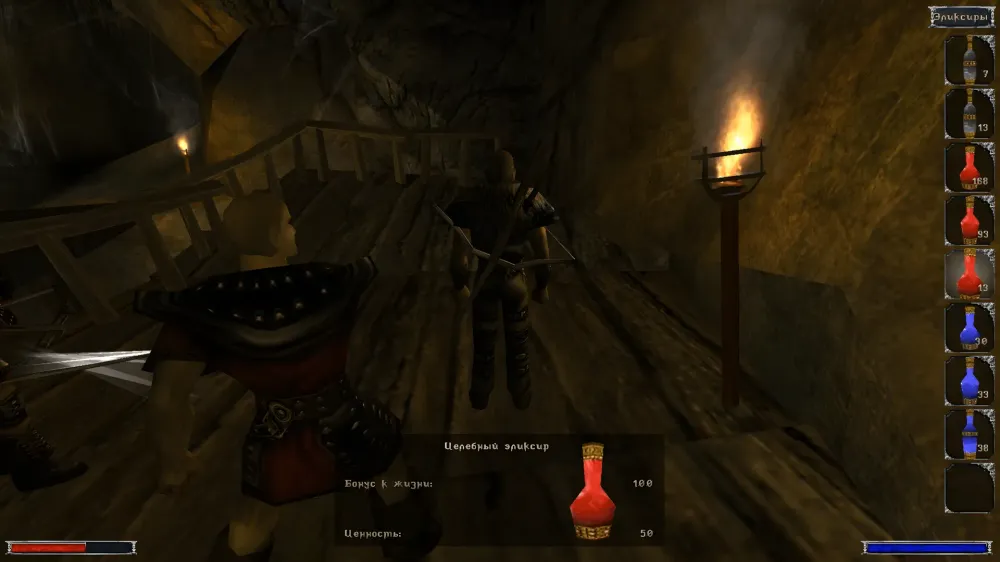
So, healing in combat is possible, but it’s hard to do in real fights, especially with potions and food.
Skills: Lots of Useless Stuff
When you level up, you get points that you can use to improve your stats and learn skills from trainers.
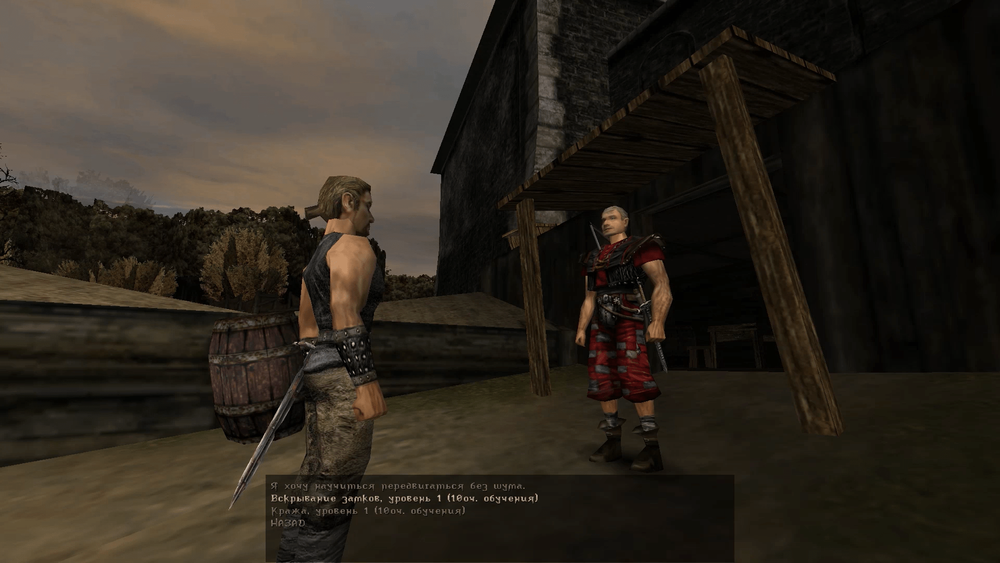
But a lot of the skills aren’t that useful.
- Weapon skills: usually, level 1 is enough to learn the main attack patterns that make most enemies easy.
- Lockpicking: the pattern input thing sounds hard, but the patterns don’t change. You can just save and load until you get it right. Leveling up mostly makes it less likely that your lockpick will break.
- Sneaking and pickpocketing: mostly just for fun. You don’t really need them for missions.
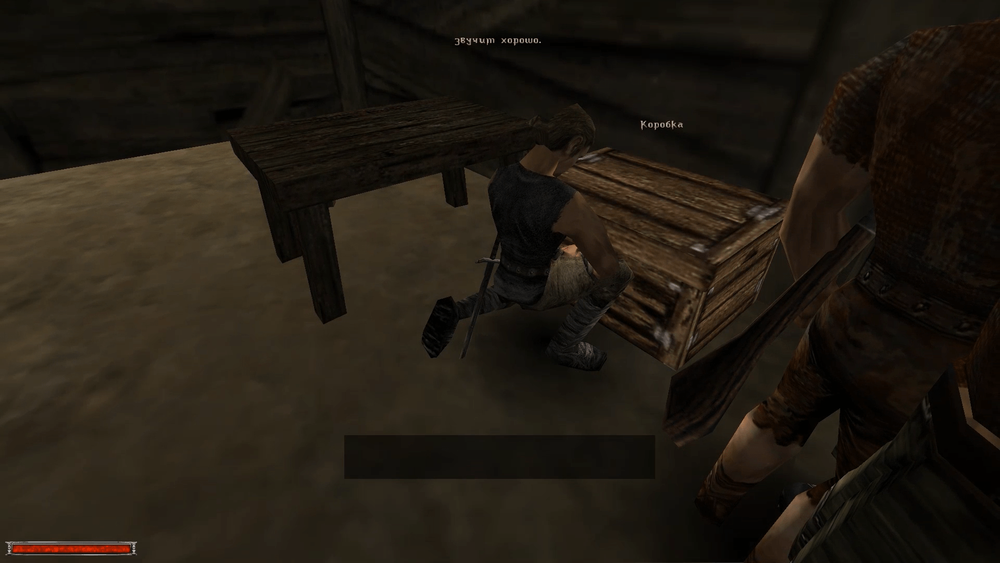
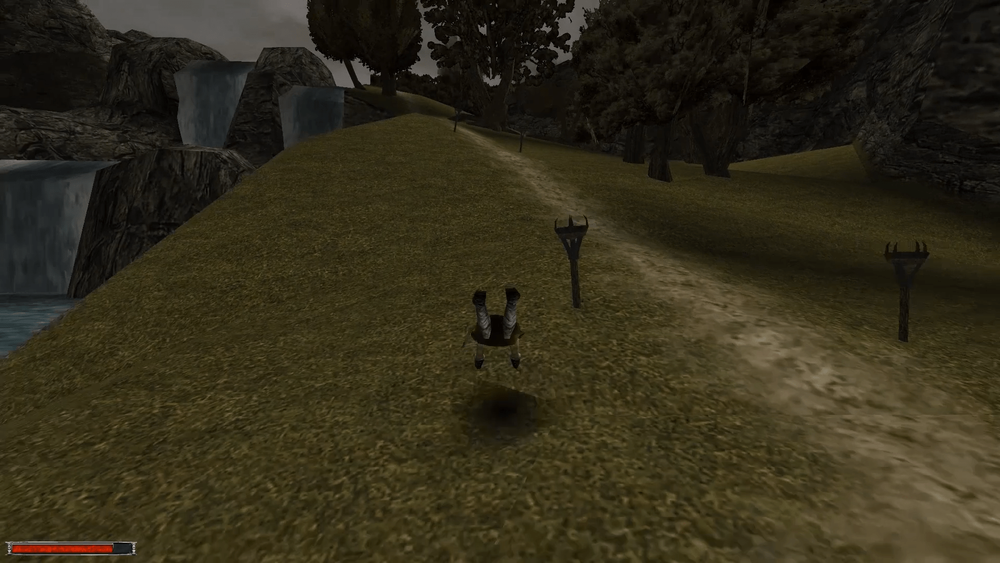
- Acrobatics: one of the best skills. It lets you jump really far and move around faster, which is great because you spend a lot of time running.
The Economy
The currency is magical ore, but you mostly trade stuff. You need ore to buy armor, but that’s about it. You can trade anything if the values match.
And then there’s smithing.
You can make a basic sword without any training at the forges in the Old Camp and Swamp Camp. There are chests with blanks nearby, and you don’t get in trouble for stealing them. If you make enough simple swords, you’ll be rich in Part 1.
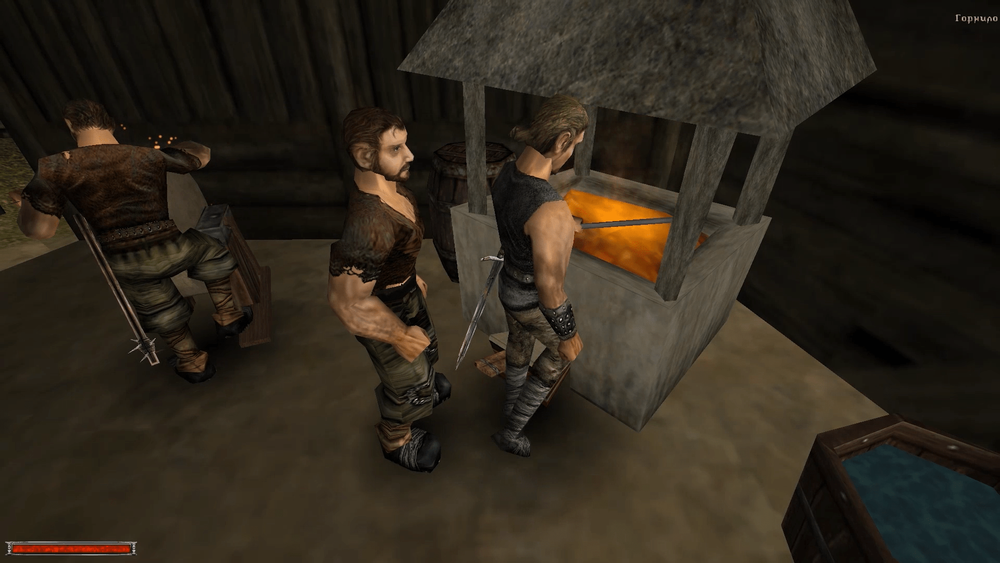
That’s not a cool secret. That’s a broken economy. It makes hunting for trophies (skins, claws, teeth) pointless because you don’t need the money.
Good Animations
This is where Gothic is actually good.
The game has a lot of special animations for things you do every day: eating, sleeping, forging, cooking, handling weapons, doing alchemy, stirring a pot, hiding in a barrel, mining ore.
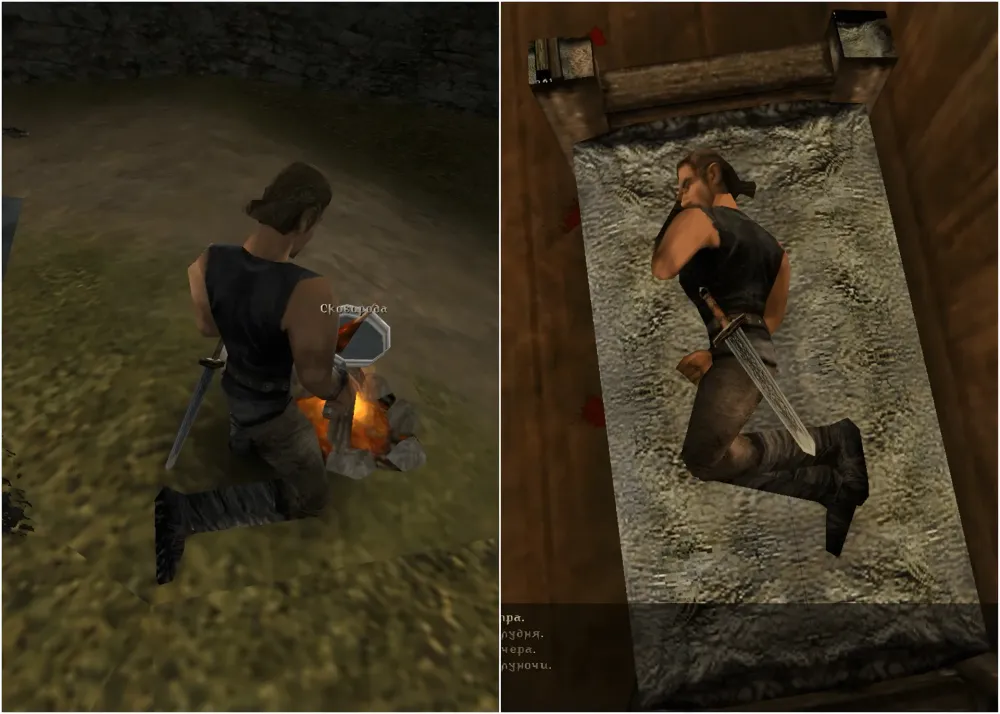
Most of these aren’t needed, but they make the world feel more real. For its time, it was impressive.
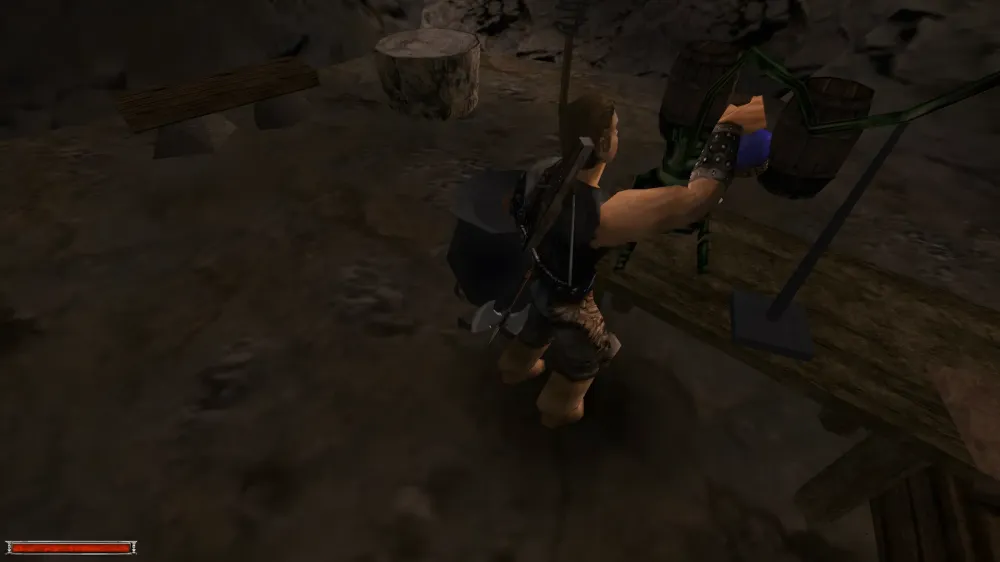
NPCs Seem Real
People say Gothic has a living world. At first, they’re right.
NPCs have schedules: they sleep at night, work during the day, relax by the fire, patrol, train, smoke, play music. The colony feels like a real place.
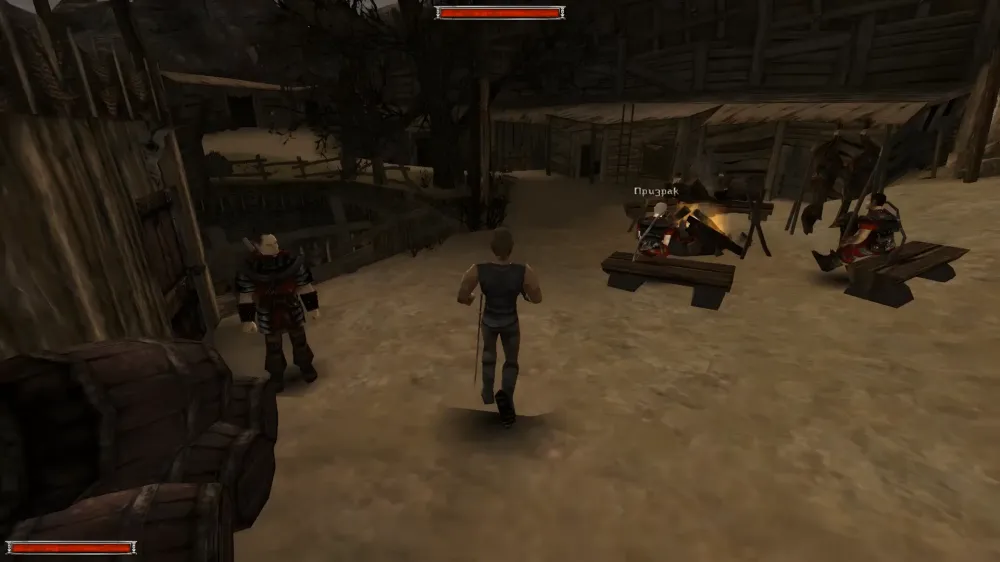
But it stops feeling real after Part 1.
By then, you’ve met everyone important. Later parts don’t have new conversations, new behaviors, or changes in camp life. Things that should change the world don’t affect the NPCs.
You might even hear NPCs say, Hi, I’m new here! even though you’re about to save the world from a demon.
Even worse, some big events happen without you seeing them because the game is made with strict rules. Areas that aren’t part of the main story stay the same. A flooded mine might not look flooded if you go there when the story doesn’t want you to.
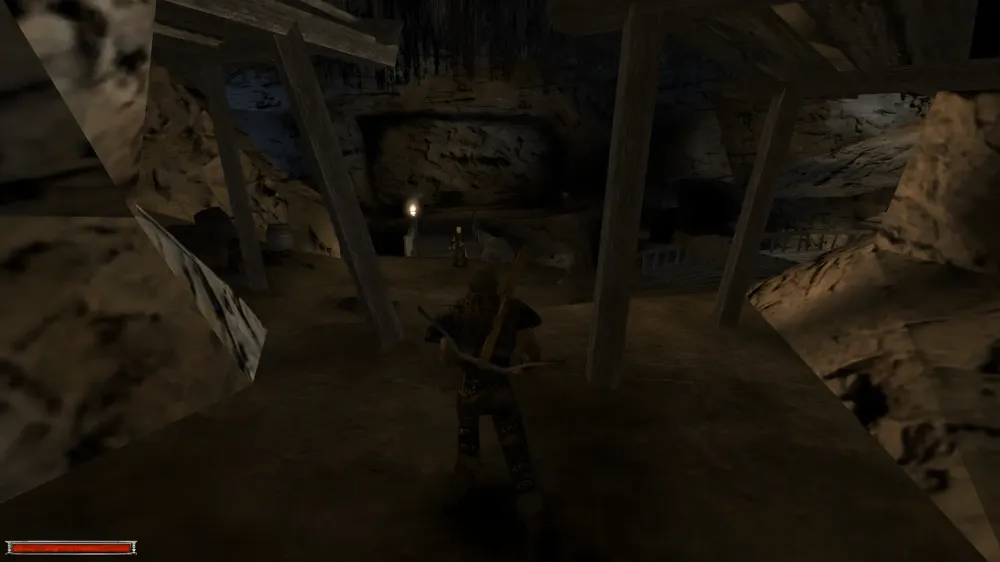
The world feels real until you realize it never really changes.
You Don’t Have As Much Freedom
People also say you can do things however you want.
Again, Part 1 makes you think that. You explore, do side quests, learn about the groups, and pick who to join. It feels like your choices matter.
Then you pick a group.
From then on, the game becomes more linear. No matter who you pick, the story is mostly the same. There are side quests, but they’re usually just long trips for small rewards.
Even the Chromanin book quest, which involves finding six books with clues, feels more like guessing than anything else. If you finish it, you don’t get much except experience and confusion.
So, Gothic lets you think you have freedom, but then it makes you follow a set path.
Groups and Classes
Each camp has a social ladder:
- Old Camp: diggers → shadows → guards → fire mages → barons (Gomez is the boss)
- New Camp: scavengers → thieves → mercenaries → water mages
- Swamp Camp: novices → templars → gurus (but you can’t become a guru)
Armor shows who you are, but it’s mostly tied to joining a group, and the differences are small.
If you want to play a fighter, it doesn’t really matter who you pick.
If you want to play a mage, it matters more:
- In Old Camp, you can become a fire wizard early and learn up to the fourth level, then switch to water wizards later.
- In New Camp, you become a mage later, but you can still get to the same point.
- In Swamp Camp, you can cast spells early, but you can’t become a real guru mage. You don’t find out how bad this is until it’s too late.
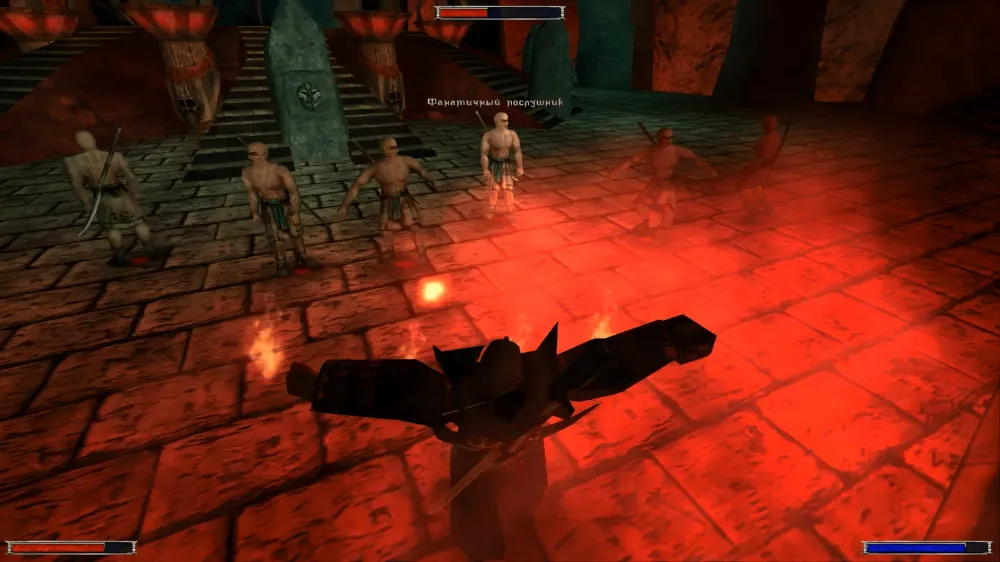
It feels like a trap: you pick a group because it sounds cool, but then you realize you made your character worse.
Exploring
The map is small because the game didn’t have a lot of money. That’s not always bad. A small world can have a lot of stuff in it.
The enemies are placed in a way that makes sense: safe roads early on, dangerous areas later. This makes you want to explore and come back to hard areas when you’re stronger.
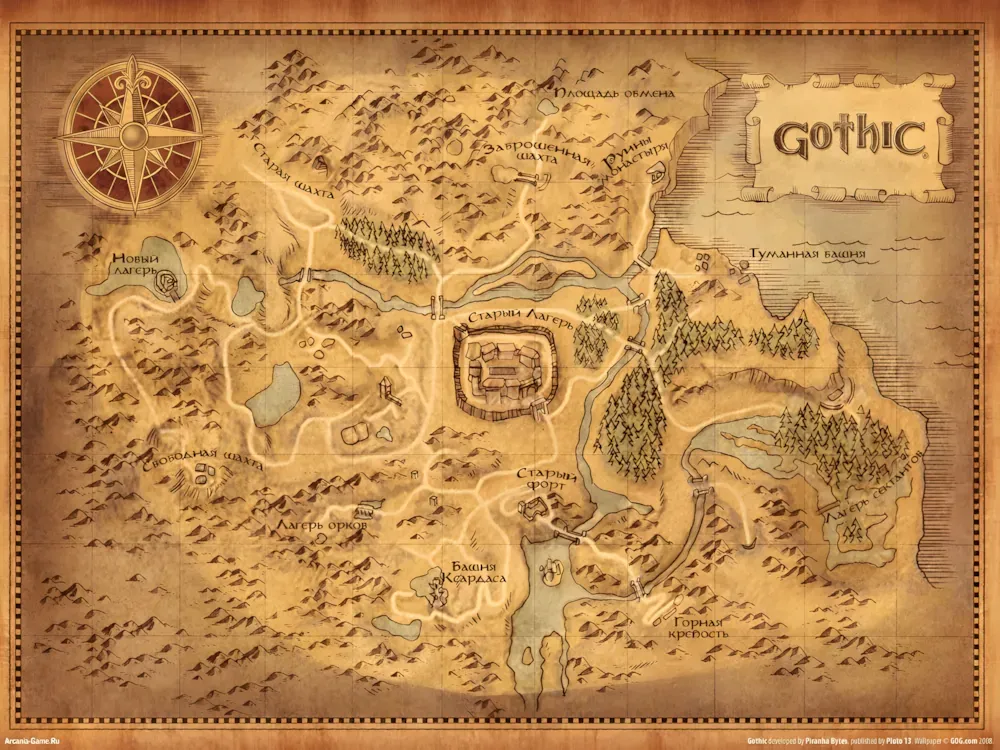
But a lot of those areas are empty. There are caves with bad items. There are buildings that hint at things that were taken out. Secret places often don’t have good rewards. The game makes you want to explore, but it doesn’t pay off enough.
Bugs
The game runs on scripts, which means that how NPCs move and the story progresses is rigid. This is why people helping you aren’t smart and why big events happen without you seeing them.
And then there are bugs.
Fixes help, but the original game was unstable. NPCs would get aggressive, textures would mess up, the game would crash. Sometimes it would just close for no reason.
That save every minute thing that Gothic players do? It’s not because the game is hard. It’s because they don’t want to lose progress.
World Isn’t That Hostile
The colony is supposed to feel bad: criminals, danger. The start of the game shows that.
But early on, you meet Diego, who helps you out. He’s polite and teaches you things. Other NPCs will take you between camps, killing monsters for you and giving you experience. Trainers will teach you without asking for much. You can get important items just by saying Diego’s name.
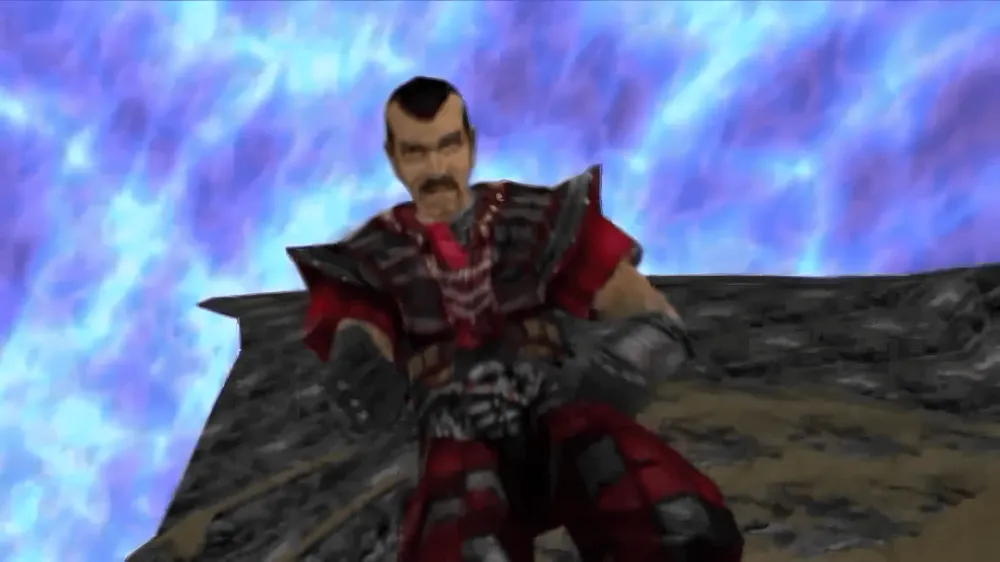
Compared to, say, Skyrim guards who arrest you for stealing, Gothic’s world is weirdly nice for a prison run by bad guys.
The danger is just for show.
Atmosphere Still Works
Despite everything, Gothic still has a good feeling.
The music is good and changes depending on where you are and what time it is. The colors fit the idea: a closed-off place, a life sentence, a sky that feels like a lid. As a kid, going into the forest at night could feel scary.
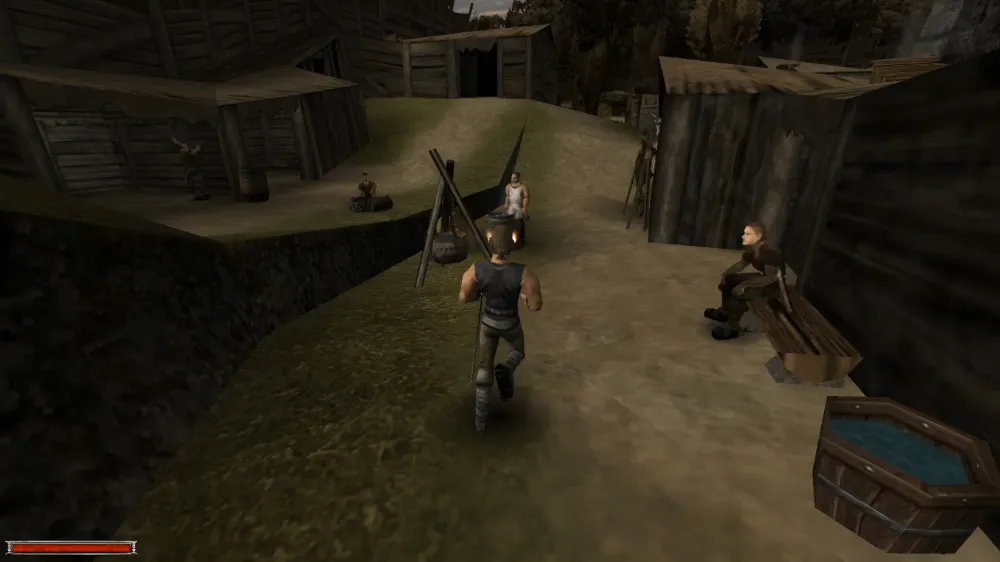
When the game isn’t messing things up with its rules, or mechanics, it can still be good.
Conclusion
Is Gothic a perfect game?
No.
Even for its time, it’s hard to say it’s amazing. Its good ideas are often ruined by bad execution. Part 1 is the best part—social, exploratory, free. Later parts are repetitive and linear.
Its difficulty is mostly because of the controls. Its danger is just for show. Its economy is easy to break. Its bugs were a big problem.
But it’s not a bad game.
It’s a rough, ambitious RPG that left a big mark, especially on players who played it when they were young.
I still like it. But I also know that I like it partly because of my childhood. If I could forget everything and play Gothic for the first time today, would I still like it?
I don’t know.
FAQ
1. Is this article a review or a nostalgic retrospective?
Both. It’s a critical analysis of Gothic (2001) from the perspective of an adult player who loved the game in childhood but re-evaluated it years later.
2. Is Gothic considered a masterpiece?
Not in a strict sense. The game has a strong atmosphere and bold ideas, but its execution often falls short due to clunky controls, balance issues, bugs, and increased linearity after the first chapter.
3. Why is the first chapter considered the best part of the game?
Because it creates a genuine sense of freedom, a living world, and meaningful choice. After that, the game becomes noticeably more linear and repetitive.
4. Why is Gothic compared to Risen?
Because Risen is mechanically very similar to Gothic 1 and 2. The comparison helps show that much of Gothic’s appeal is rooted in nostalgia rather than purely superior game design.
5. Does Gothic really have a “living” world?
Partially. NPCs have daily routines and unique animations, but the world barely reacts to major story events after the early stages of the game.
6. How important is nostalgia in how Gothic is perceived?
Crucial. The article directly suggests that playing Gothic for the first time today would likely result in a very different experience.
7. Is Gothic worth playing in the 2020s?
Only if you’re willing to tolerate outdated mechanics, awkward controls, and bugs in exchange for atmosphere and historical significance.
8. Who is this article especially for?
Players who grew up with Gothic, fans of classic RPGs, and anyone looking for an honest, non-fanboy take on a cult game.
Source Author: Belalin