AMD FSR 4.1: A New Step in AI Upscaling and Gaming Performance
When AMD officially introduced FSR 4.1, it wasn’t just another incremental update—it marked a noticeable shift in how the company approaches image upscaling and performance optimization in modern games. For years, FidelityFX Super Resolution has been AMD’s answer to performance-hungry rendering, but with version 4.1, the conversation changes.
This time, the focus isn’t only on squeezing more frames per second—it’s about doing so while preserving, and even improving, visual clarity in ways that feel less artificial and more consistent with native rendering.
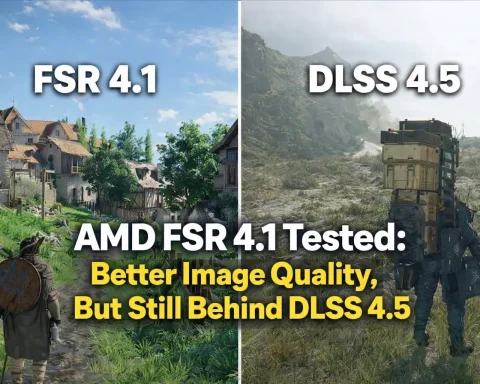
To see if this new focus on visual fidelity truly delivers and how it stacks up against the competition, we put it to the test in AMD FSR 4.1 Tested: Better Image Quality, But Still Behind DLSS 4.5.
Table of Contents
What AMD FSR 4.1 Actually Brings to the Table
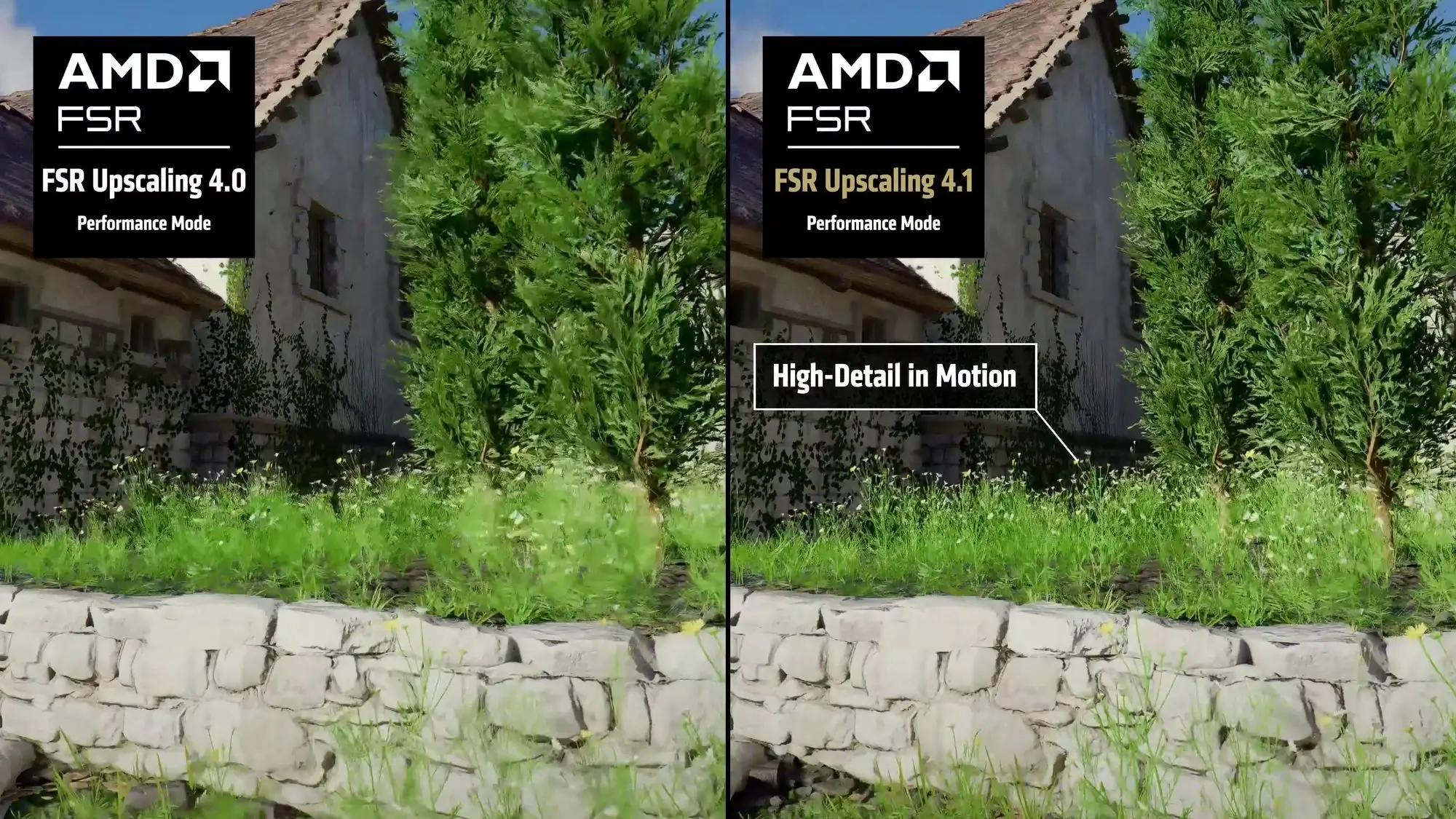
At its core, FSR 4.1 is described as an enhanced upscaling solution built on machine learning principles. That alone signals a meaningful evolution. Earlier versions of FSR relied more heavily on spatial and temporal reconstruction techniques, but now AMD is leaning into AI-assisted processing to refine the final image.
The result, at least according to AMD’s own presentation, is a cleaner and more detailed image. Edges appear sharper, fine textures hold together better, and motion—something that often exposes weaknesses in upscalers—feels smoother and more stable.
If you’ve ever noticed shimmering, ghosting, or instability in fast-moving scenes with previous upscaling solutions, this is exactly the kind of issue FSR 4.1 is aiming to address.
A Noticeable Shift Toward AI-Based Rendering
One of the most important aspects of FSR 4.1 isn’t immediately visible in screenshots—it’s the underlying philosophy. AMD is clearly moving closer to AI-driven rendering pipelines, aligning more with industry trends rather than sticking purely to traditional reconstruction methods.
This doesn’t just improve image quality in a static sense. It affects how scenes behave in motion, how lighting transitions are handled, and how fine details persist when the camera moves.
In practical terms, it means fewer visual artifacts and a more consistent experience across different gameplay scenarios. And that consistency matters more than raw sharpness, especially in modern, visually complex titles.
Performance, Visual Quality, and the Ultra Performance Preset
Performance has always been at the heart of FSR, and version 4.1 continues that tradition—but with a slightly different angle. Instead of forcing players to choose between clarity and frame rate, AMD is trying to reduce that compromise.
A key highlight here is the Ultra Performance preset, which pushes aggressive upscaling to deliver significant FPS gains. According to AMD, even under such demanding conditions, FSR 4.1 maintains a higher level of detail than previous versions.
This is particularly relevant for players targeting high refresh rates or demanding resolutions like 4K, where every frame counts. The idea is simple: more performance without the usual penalty in visual fidelity.
Hardware Limitations: Who Can Actually Use It?
Here’s where things get a bit restrictive. Despite all the advancements, FSR 4.1 isn’t universally available.
AMD has confirmed that the technology is exclusive to Radeon RX 9000 series GPUs based on the RDNA 4 architecture.
This decision likely reflects the increased computational demands of machine learning-based upscaling. While earlier FSR versions were known for their broad compatibility—even on competing hardware—FSR 4.1 takes a more controlled approach.
For users on older GPUs, this means the improvements remain out of reach for now, reinforcing a growing trend: next-gen features are increasingly tied to next-gen hardware.
First Implementations and Real-World Use
Every new graphics technology ultimately lives or dies by its real-world implementation. In the case of FSR 4.1, the first confirmed title to support it is Crimson Desert, an upcoming action RPG.
While one game isn’t enough to fully judge a technology’s impact, it gives us an early glimpse into how developers might integrate it. The real test will come as more studios adopt FSR 4.1 and experiment with its capabilities across different genres and engines.
If adoption grows quickly, it could become a serious competitor in the evolving upscaling ecosystem.
The Unexpected Link to PlayStation Technology
One of the more interesting details surrounding FSR 4.1 is its connection to console technology.
According to PlayStation hardware architect Mark Cerny, the new upscaler is based on PSSR 2, a recently introduced upscaling solution for the PlayStation 5 Pro.
This crossover hints at something bigger happening behind the scenes. The line between PC and console graphics technologies is becoming increasingly blurred, with shared innovations benefiting both ecosystems.
For gamers, that’s ultimately a good thing—it means faster iteration, better optimization, and more consistent visual experiences across platforms.
Final Thoughts
FSR 4.1 feels less like a routine update and more like a strategic shift for AMD. By embracing machine learning and tightening hardware requirements, the company is clearly positioning itself for the next phase of graphics evolution.
There are still open questions—how well it performs across a wide range of games, how quickly developers adopt it, and whether it can match or surpass competing solutions in real-world scenarios.
But one thing is clear: AMD is no longer just refining upscaling. It’s redefining how it fits into the modern rendering pipeline.