
Intel Core Ultra 7 270K Plus Review: A Surprisingly Strong AMD Competitor
Every once in a while, a processor shows up that quietly shifts expectations. Not by breaking every benchmark record, but by doing something arguably more important — delivering high-end performance at a price that makes you pause.
That’s exactly where the Intel Core Ultra 7 270K Plus lands. According to testing highlighted by Gamers Nexus, this chip doesn’t just compete — it edges into territory previously reserved for much more expensive CPUs.
And when you start looking closer, the story becomes even more interesting.
While Intel is showing strong competition, AMD is also pushing the boundaries with its own powerful new releases, like the upcoming Ryzen 9 9950X3D2: AMD’s Dual 3D V-Cache Flagship Specs, Performance & Release Date.
Table of Contents
A Comeback Moment for Intel

After a few underwhelming generations, Intel needed something convincing — not just incremental gains, but a real signal that things are moving in the right direction. The 270K Plus feels like that moment.
At around $300, it positions itself aggressively. But price alone doesn’t win attention in today’s CPU market. What matters is how it performs against serious competition — and here, Intel does something unexpected.
Instead of targeting mid-range rivals, this chip steps into the ring with processors like the AMD Ryzen 9 9950X. That’s not a small claim. That’s flagship territory.
Productivity Performance That Changes the Conversation
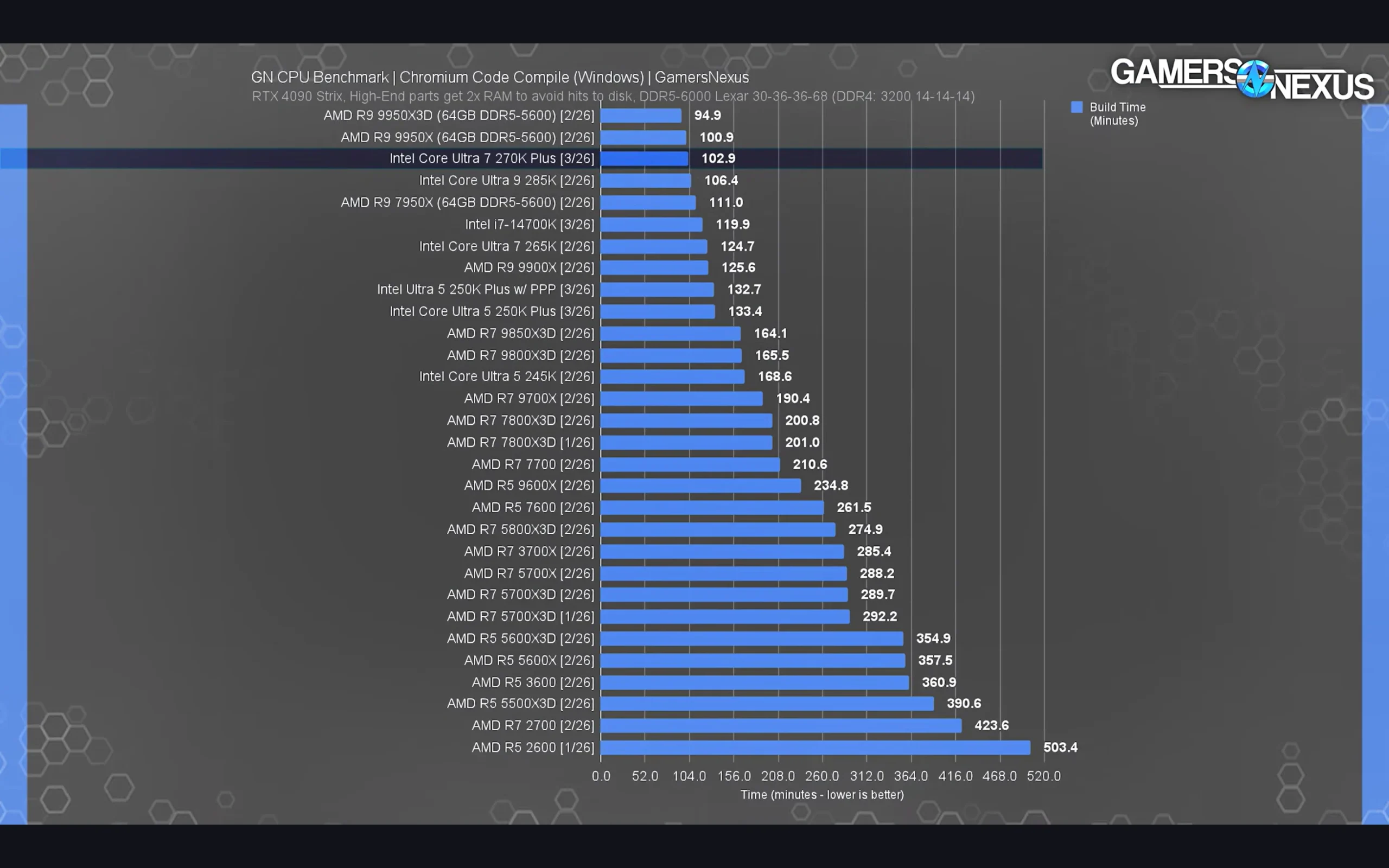
If your workload involves compiling code, rendering scenes, or any CPU-heavy professional tasks, this is where the Core Ultra 7 270K Plus really starts to shine.
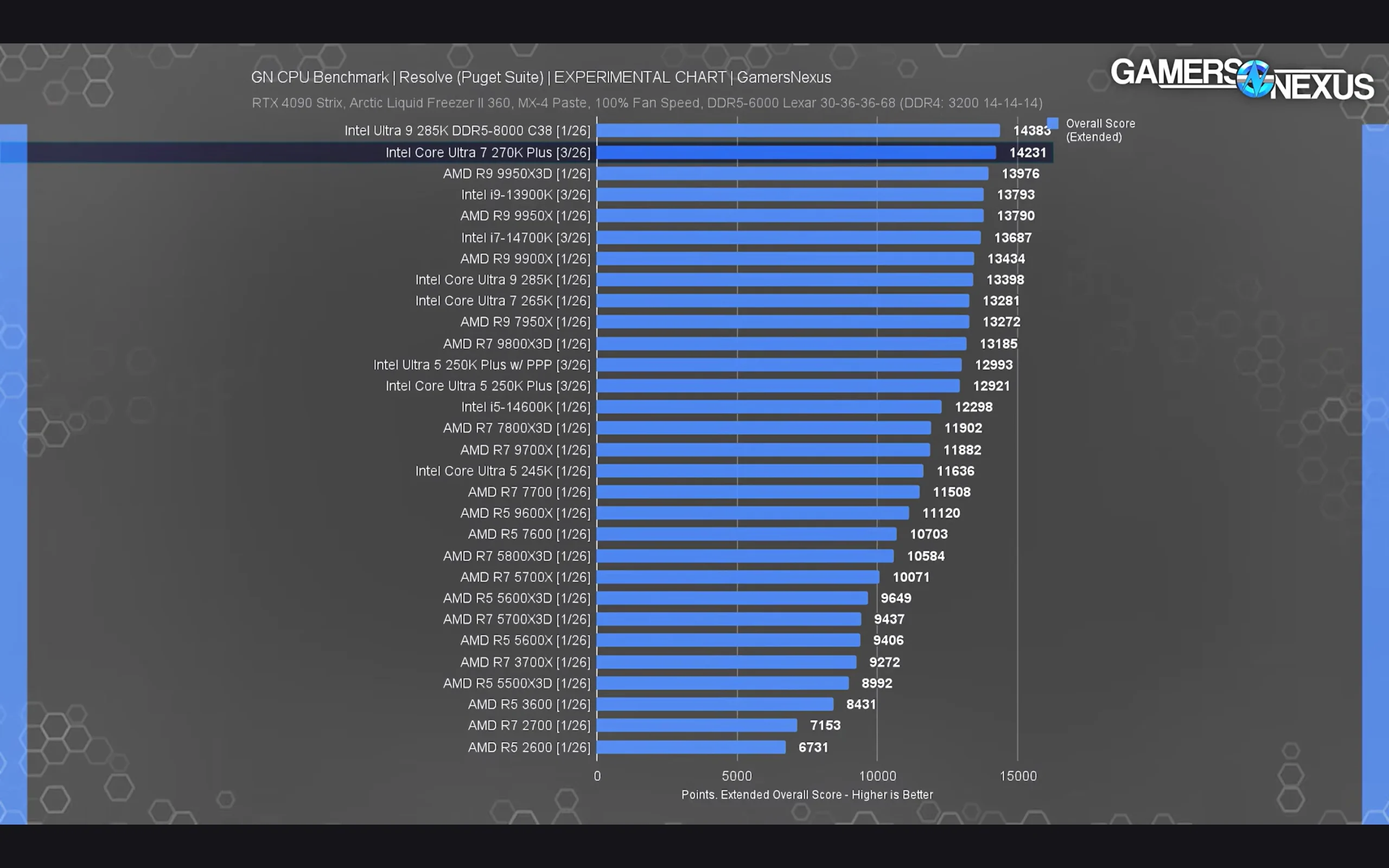
In multiple benchmarks, it nearly matches AMD’s high-end chips, falling behind only by small margins — sometimes just a few percentage points.
What makes this impressive isn’t just the raw numbers. It’s the value equation.
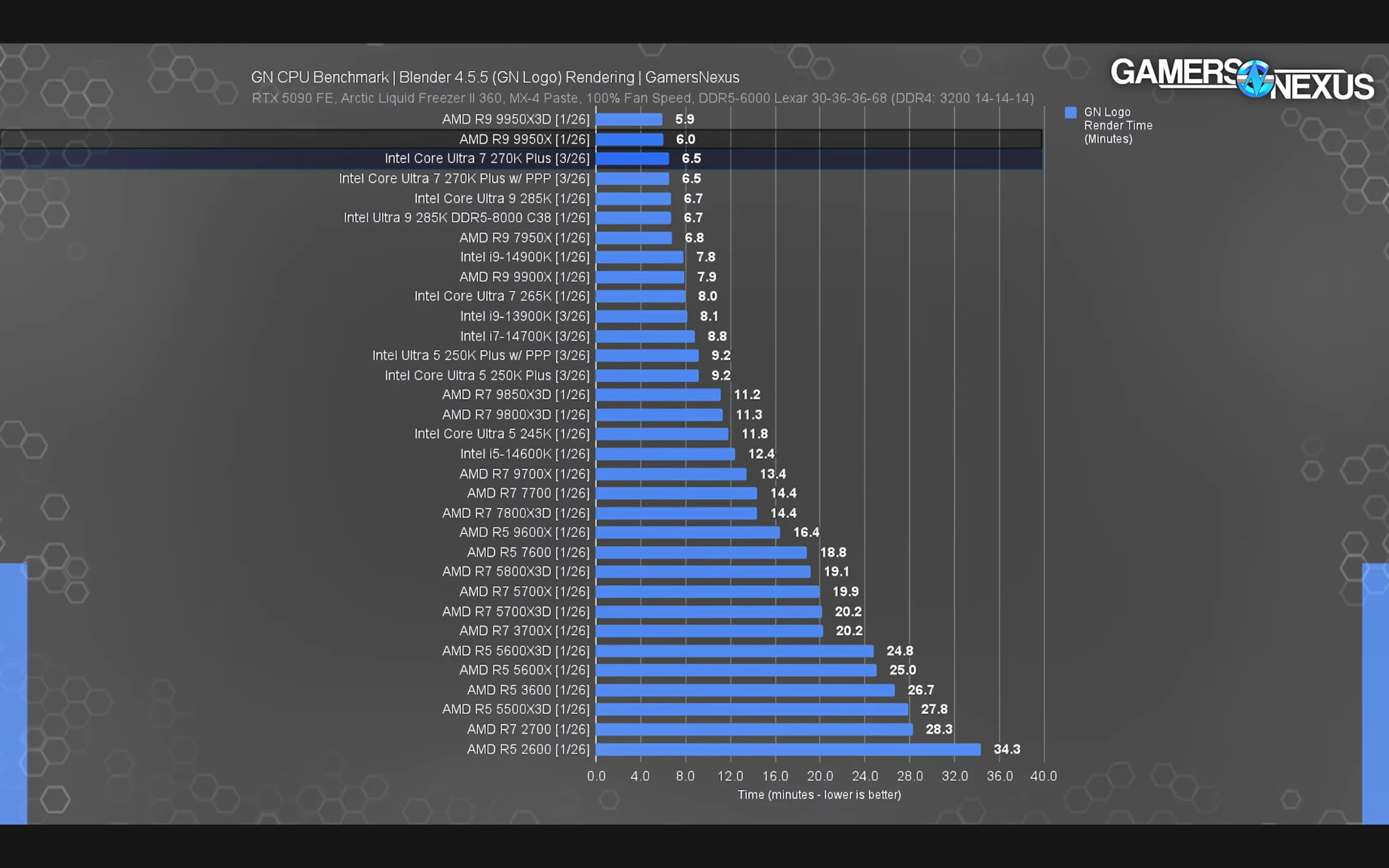
You’re essentially getting performance that sits close to top-tier CPUs, but without paying top-tier prices. That shifts how this chip should be viewed. It’s no longer just “good for its class” — it’s competing above its weight.
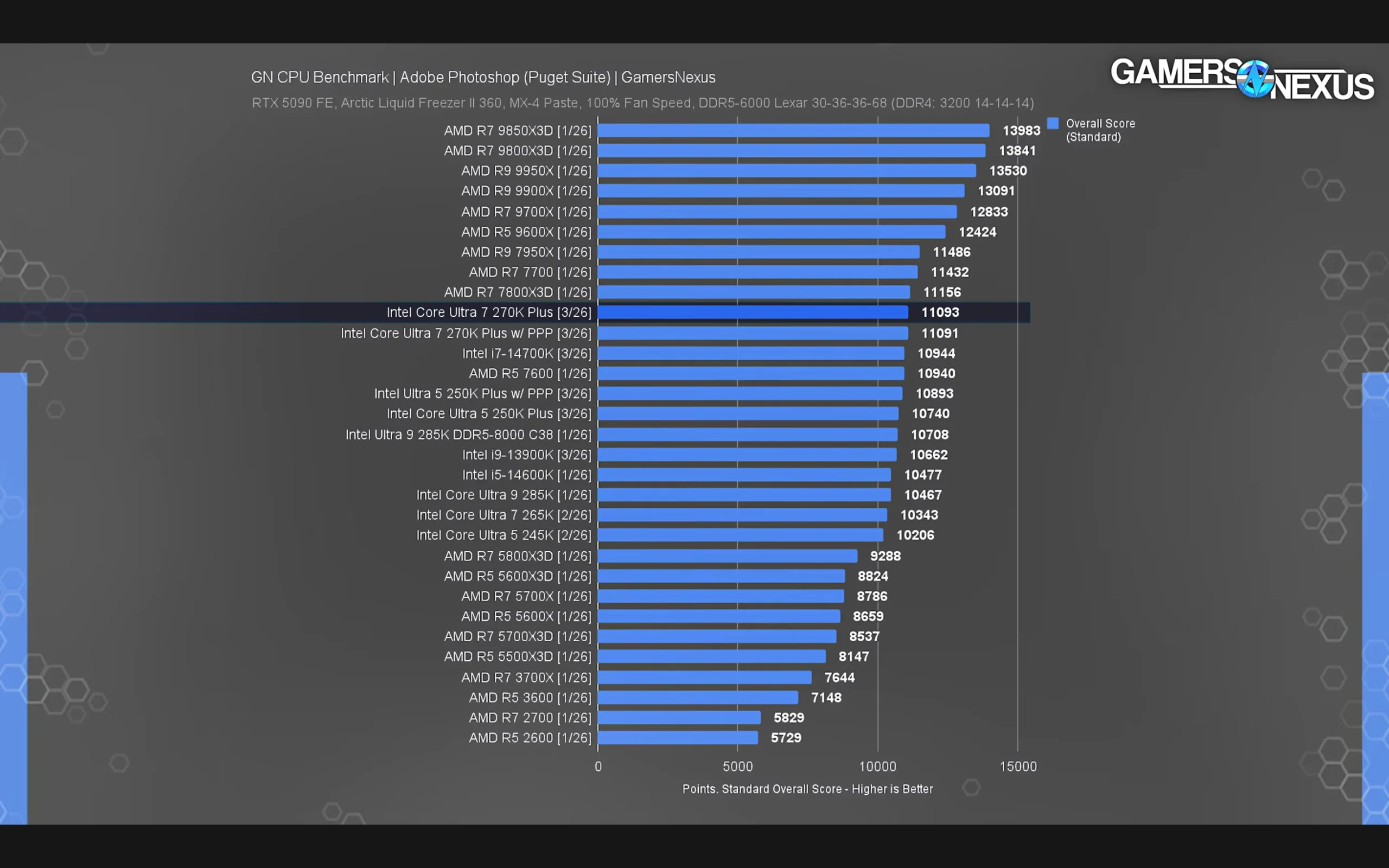
Even more telling is how it compares to Intel’s own past. In some scenarios, the 270K Plus actually outperforms previous flagship models, signaling genuine architectural progress rather than incremental tuning.
That’s something Intel hasn’t consistently delivered in recent years.
Gaming Performance: Better, But Not Dominant
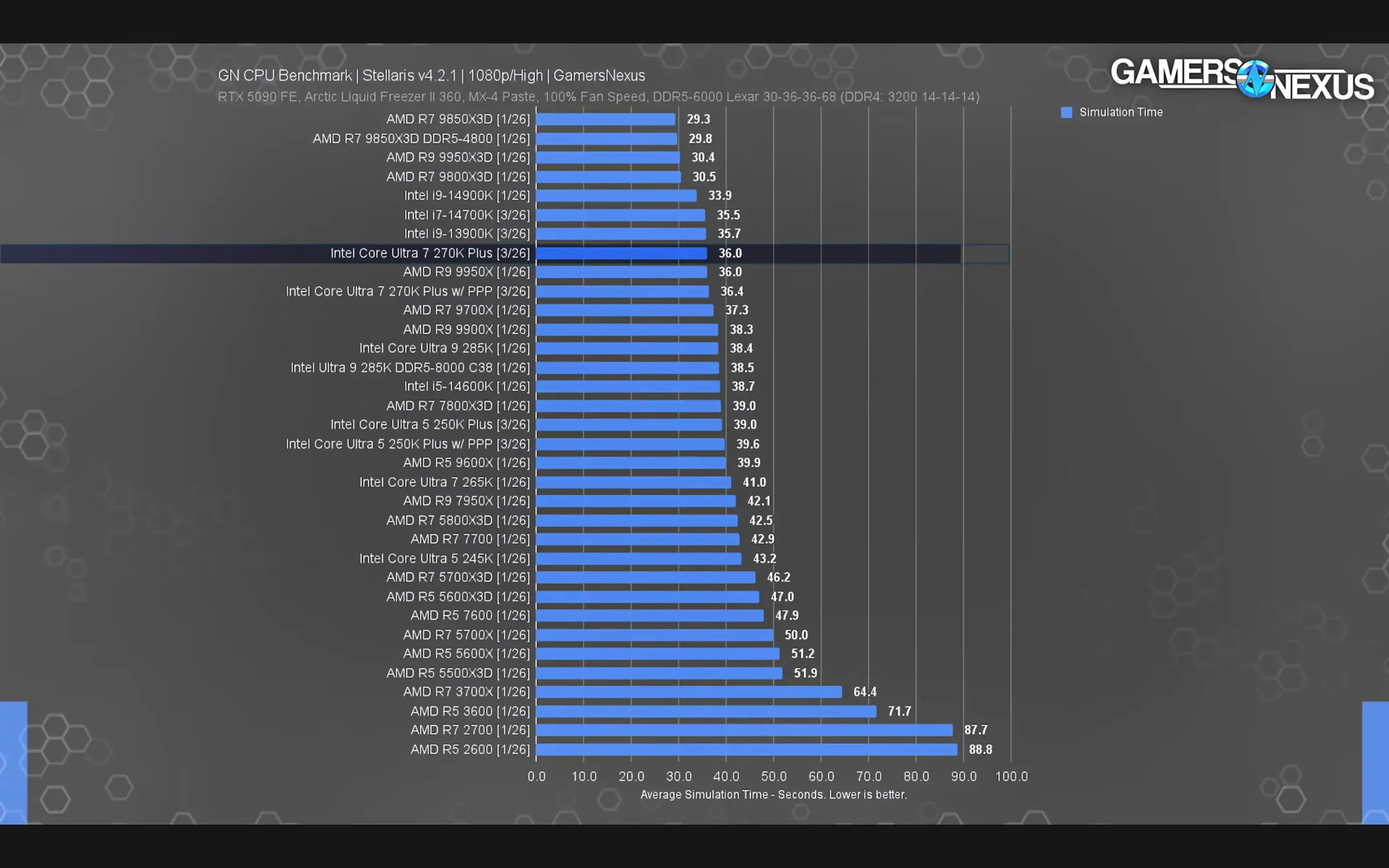
Gaming is where things become a bit more nuanced.
The Core Ultra 7 270K Plus improves noticeably compared to earlier Intel offerings, narrowing the gap with AMD. But it doesn’t completely close it.
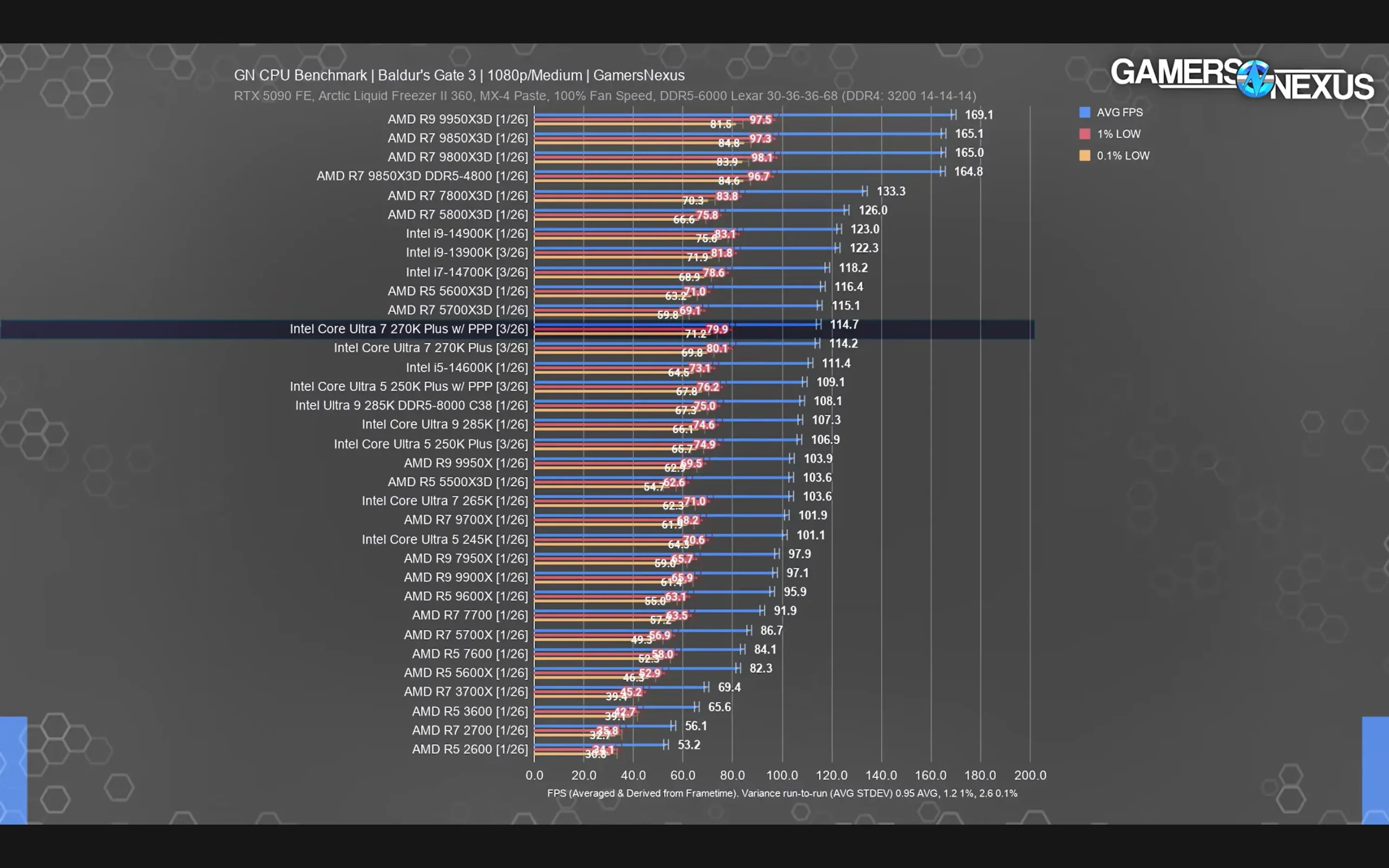
AMD’s processors with 3D V-Cache still hold the advantage in many gaming scenarios. That extra cache continues to give them an edge in frame consistency and peak performance.
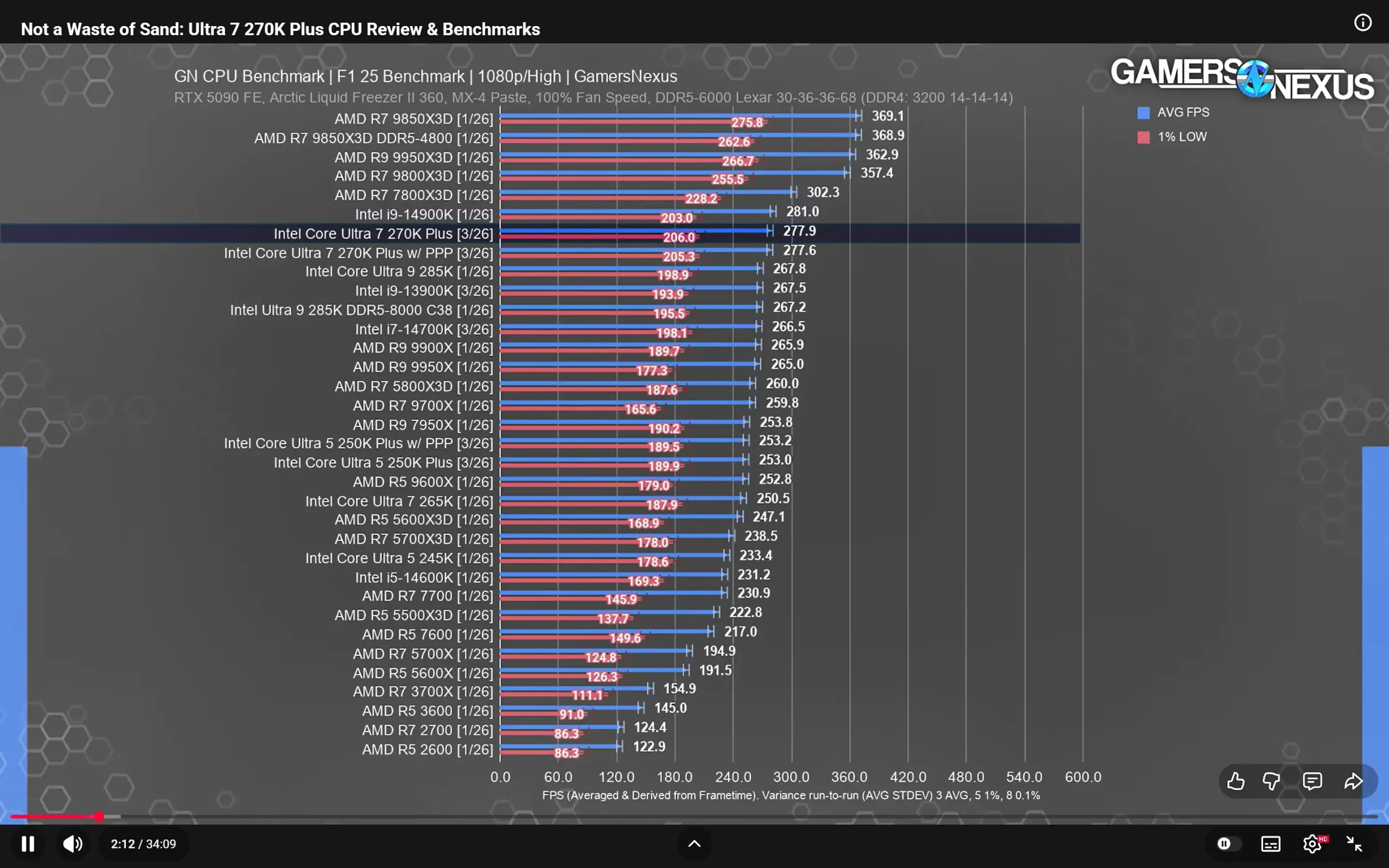
That said, the gap is no longer dramatic. In several titles, the difference is small enough that it may not impact real-world gameplay in a meaningful way.
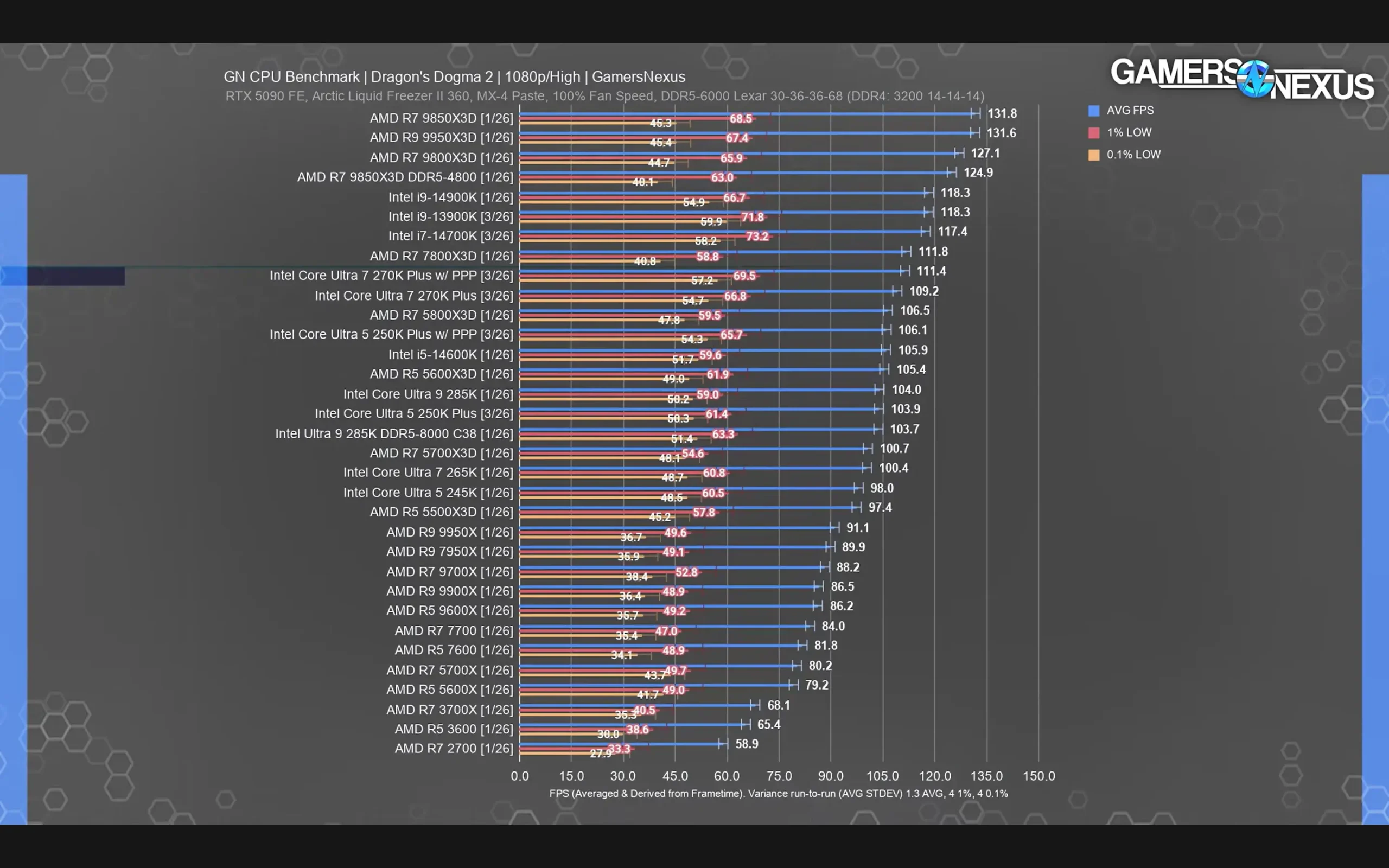
And that’s an important shift.
For many users, the decision is no longer obvious. It’s no longer “AMD for gaming, Intel for something else.” The lines are starting to blur again.
The Platform Problem You Shouldn’t Ignore
If there’s one area where the Core Ultra 7 270K Plus raises concerns, it’s not performance — it’s the platform.
The processor is tied to a socket with limited upgrade potential, which immediately affects long-term value.
That might not matter if you upgrade your entire system every few years. But if you prefer incremental upgrades — swapping CPUs while keeping your motherboard — this becomes a real drawback.
There’s also a smaller but notable detail:
in testing, the chip doesn’t always reach its advertised boost frequencies.
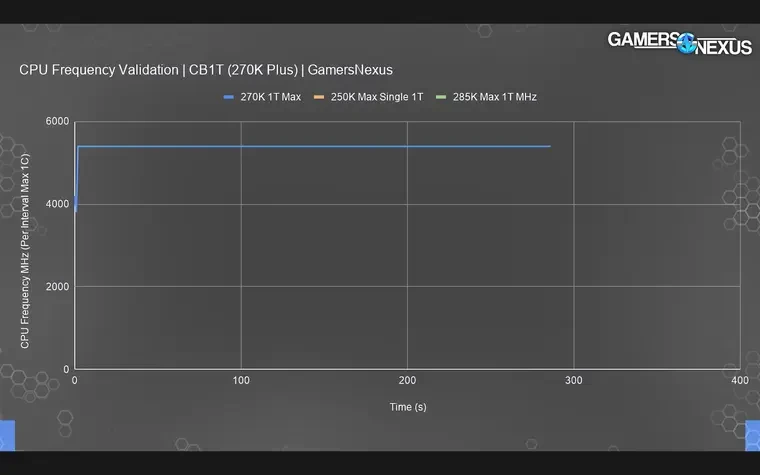
It’s not a deal-breaker, but it adds a layer of inconsistency that enthusiasts tend to notice.
So while the raw performance is strong, the surrounding ecosystem feels slightly less future-proof compared to AMD’s more flexible platform approach.
Final Verdict: A Strong CPU With a Strategic Trade-Off
The Intel Core Ultra 7 270K Plus isn’t trying to be the absolute best CPU on the market.
Instead, it does something arguably smarter.
It delivers near-flagship productivity performance at a mid-range price, while improving gaming results enough to stay relevant across both worlds.
Yes, there are compromises — particularly around platform longevity and slight frequency inconsistencies. But those don’t erase what this chip represents.
It’s a sign that Intel is regaining momentum.
And more importantly, it gives users something they haven’t had in a while:
a genuinely difficult choice between Intel and AMD again.
Source: Gamers Nexus

