
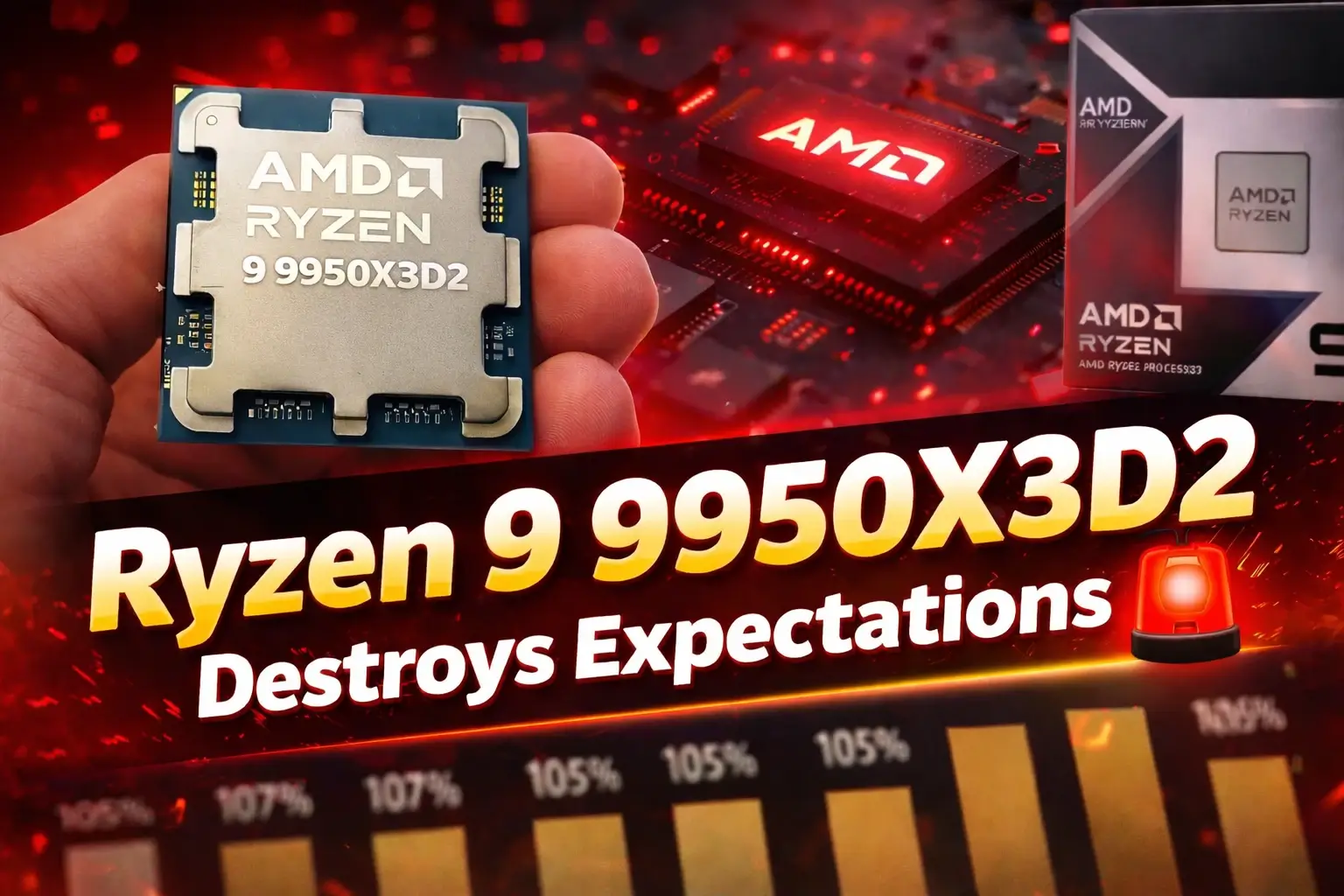
Ryzen 9 9950X3D2: AMD’s Most Ambitious Desktop CPU Yet
When AMD introduces a new flagship processor, expectations are always high—but the Ryzen 9 9950X3D2 feels like something more deliberate. Not just another incremental upgrade, but a statement about where desktop CPUs are heading next.
Built for the AM5 platform and powered by Zen 5 architecture, this chip doesn’t just refine existing ideas—it combines them. And at the center of it all is a feature AMD has been steadily perfecting: 3D V-Cache.
Table of Contents
A New Level of 3D V-Cache Technology
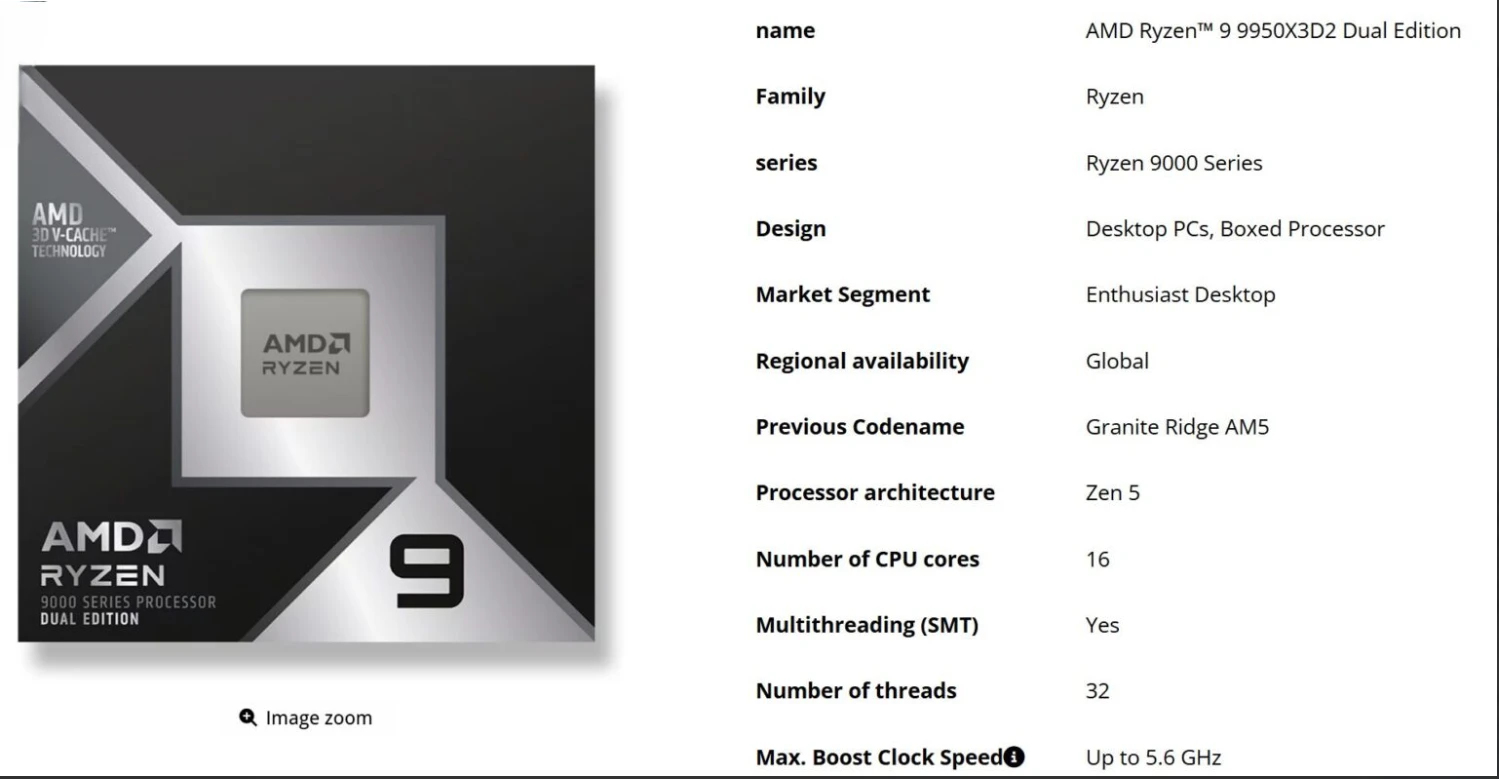
The Ryzen 9 9950X3D2 is the first desktop processor from AMD to feature two 3D V-Cache chiplets. That alone makes it stand out.
Until now, AMD’s X3D lineup has relied on a single stacked cache design to boost gaming performance. But here, the company is effectively doubling down—literally—on that concept. The result is a processor with an enormous 192 MB of L3 cache, bringing total cache to 208 MB.
Why does this matter? Because cache is often the hidden factor behind smooth performance. It reduces latency, improves data access speed, and—especially in games—can dramatically increase frame consistency.
With two V-Cache dies, AMD is pushing this advantage further than ever before.
Specifications That Define a Flagship
On paper, the Ryzen 9 9950X3D2 checks every box you’d expect from a top-tier desktop CPU—and then some.
It features 16 physical cores and 32 threads, making it equally suited for gaming, streaming, and heavy multitasking. The chip can reach a boost clock of up to 5.6 GHz, while operating within a 200W TDP envelope.
These numbers alone would place it firmly in the high-end category. But combined with its massive cache and Zen 5 architecture, it becomes clear that AMD is targeting a very specific audience: users who want no compromise performance.
Interestingly, AMD positions this processor as a hybrid of sorts—a chip that merges the strengths of previous models like the Ryzen 9 9850X3D and 9950X3D.
It’s not just an upgrade. It’s consolidation.
Performance: Beyond Gaming Into Real Workloads
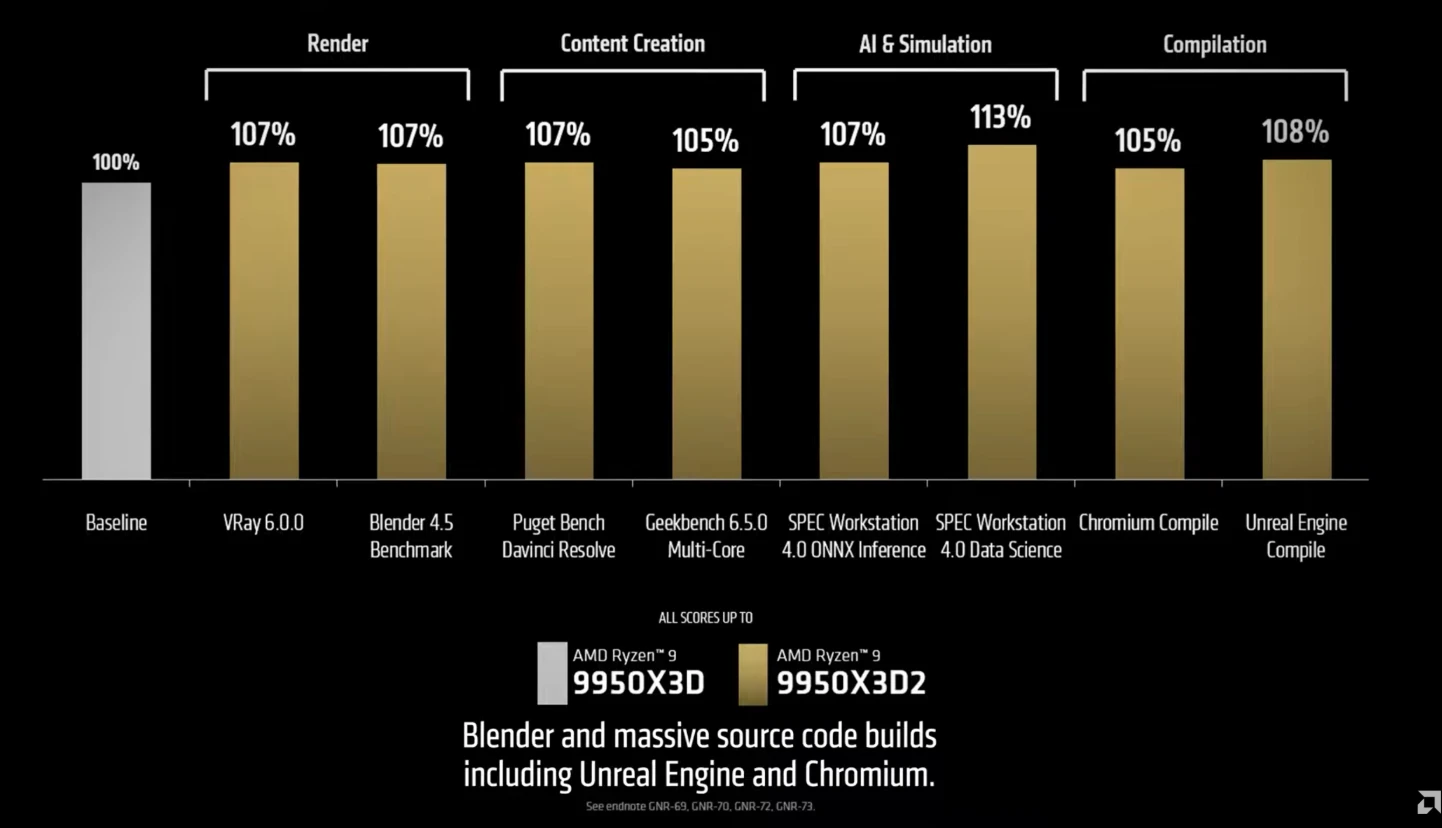
While X3D processors are often associated with gaming, AMD is making a broader claim this time.
According to internal benchmarks, the Ryzen 9 9950X3D2 delivers 5–13% higher performance in productivity workloads compared to the standard Ryzen 9 9950X3D.
That’s a meaningful jump—especially considering how close flagship CPUs already are in raw power.
The included performance chart (page 2 of the source) highlights gains across several categories:
- Rendering workloads
- Content creation tools
- AI simulations
- Compilation tasks
The implication here is subtle but important. AMD isn’t just chasing gaming benchmarks anymore. It’s trying to position X3D chips as true all-rounders, capable of handling both entertainment and serious production work without trade-offs.
Platform, Architecture, and Positioning
Under the hood, the Ryzen 9 9950X3D2 is based on the Zen 5 architecture, part of the Ryzen 9000 series. It’s designed for the AM5 socket, ensuring compatibility with AMD’s latest platform ecosystem.
This matters more than it might seem.
AM5 is AMD’s long-term platform, which means buyers aren’t just investing in a CPU—they’re buying into an upgrade path. With DDR5 memory and modern connectivity standards already in place, this chip fits neatly into a future-proof setup.
And in AMD’s own words, the 9950X3D2 is positioned as the ultimate solution for AM5.
That’s a bold claim—but given the specs, not an unreasonable one.
Release Date and What We Still Don’t Know
AMD has confirmed that the Ryzen 9 9950X3D2 will launch on April 22.
What’s still missing, however, is the price.
And that’s not a small detail.
Flagship CPUs often live or die by their value proposition. Without pricing, it’s difficult to say whether this processor will dominate its segment—or simply exist as a halo product for enthusiasts.
Still, based on its positioning and features, it’s safe to assume this won’t be a budget-friendly chip.
Final Thoughts
The Ryzen 9 9950X3D2 comes across as AMD taking a formula that was already solid and tweaking it to go beyond what many anticipated.
With dual 3D V-Cache, a high number of cores, solid boost speeds, and better productivity, this processor seems aimed at people who need a bit of everything. It’s not just for gamers or creators alone—it’s for those who want both.
Source: AMD

