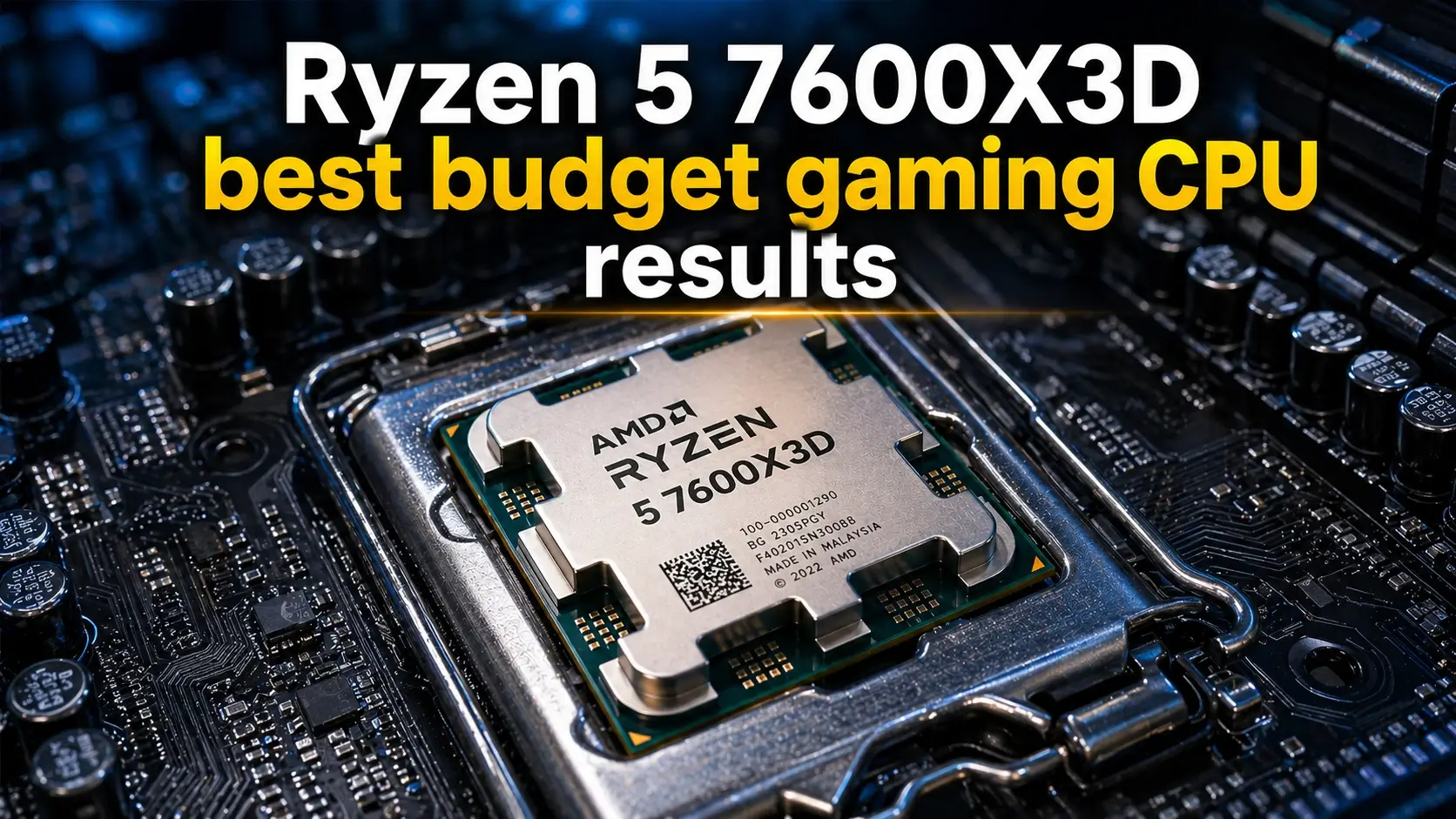
Ryzen 5 7600X3D Named Best Budget Gaming CPU by Tom’s Hardware
Tom’s Hardware has identified the Ryzen 5 7600X3D as the best processor for affordable gaming PCs following a series of independent benchmarks. The conclusion comes after testing the six-core chip across 17 modern games at 1080p resolution using a GeForce RTX 5090 graphics card.
Gaming performance results in 17 titles
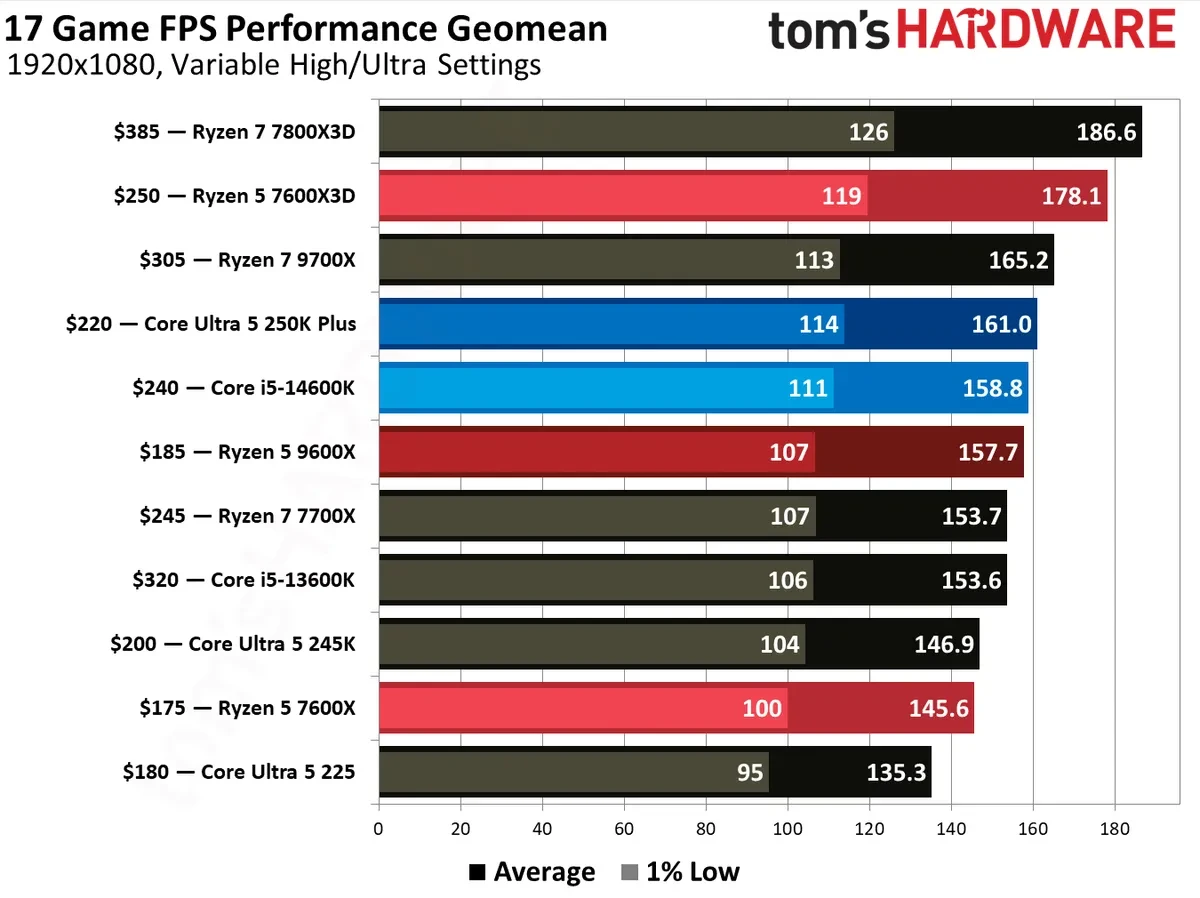
In gaming workloads, the Ryzen 5 7600X3D delivered results close to significantly more expensive models. Across the test suite, it was only 4.5% slower than the higher-end Ryzen 7 7800X3D.
The processor also outperformed several competitors:
- Around 10% faster than Intel Core Ultra 5 250K Plus
- About 8% ahead of Ryzen 7 9700X
- Up to 22% faster than the standard Ryzen 5 7600X
In some titles, including Crimson Desert, Marvel Rivals, and Minecraft RTX, it matched the frame rates of the Ryzen 7 7800X3D.
How it compares to competing processors
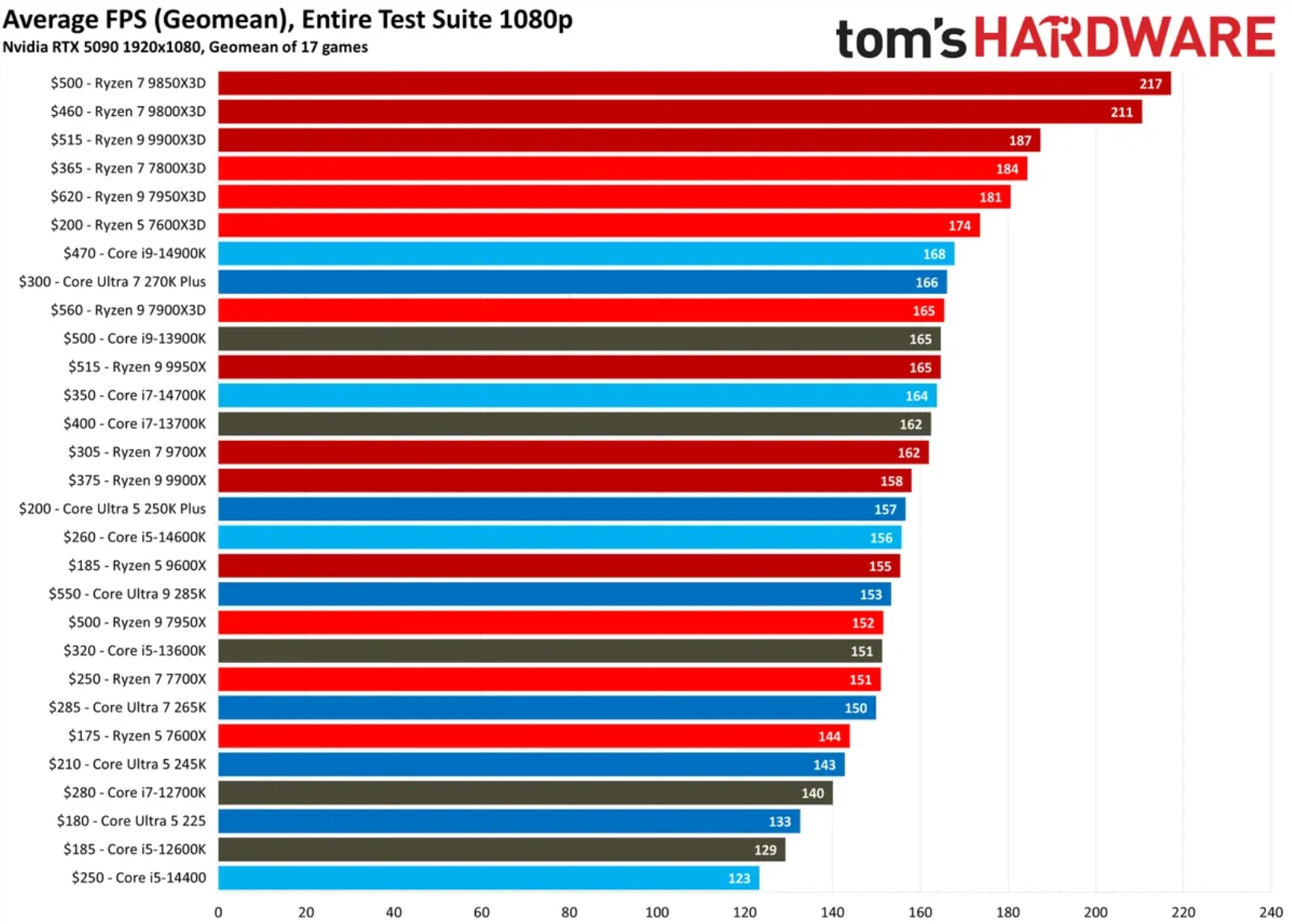
Based on aggregated results, the Ryzen 5 7600X3D ranked sixth among the fastest gaming CPUs tested by Tom’s Hardware. Notably, it outperformed several higher-priced processors, including:
- Intel Core i9-14900K
- Intel Core i9-13900K
- Intel Core i7-13700K
- AMD Ryzen 7900X3D
This positioning highlights its efficiency in gaming-focused scenarios despite having fewer cores than many competitors.
Strengths in gaming, weaknesses in workloads
While gaming performance proved strong, the chip showed weaker results in synthetic benchmarks and productivity applications. In those tests, it even lagged behind the non-3D Ryzen 5 7600X.
This suggests the processor is optimized primarily for gaming rather than multi-threaded workloads such as rendering or heavy content creation.
Why it leads in price-to-performance
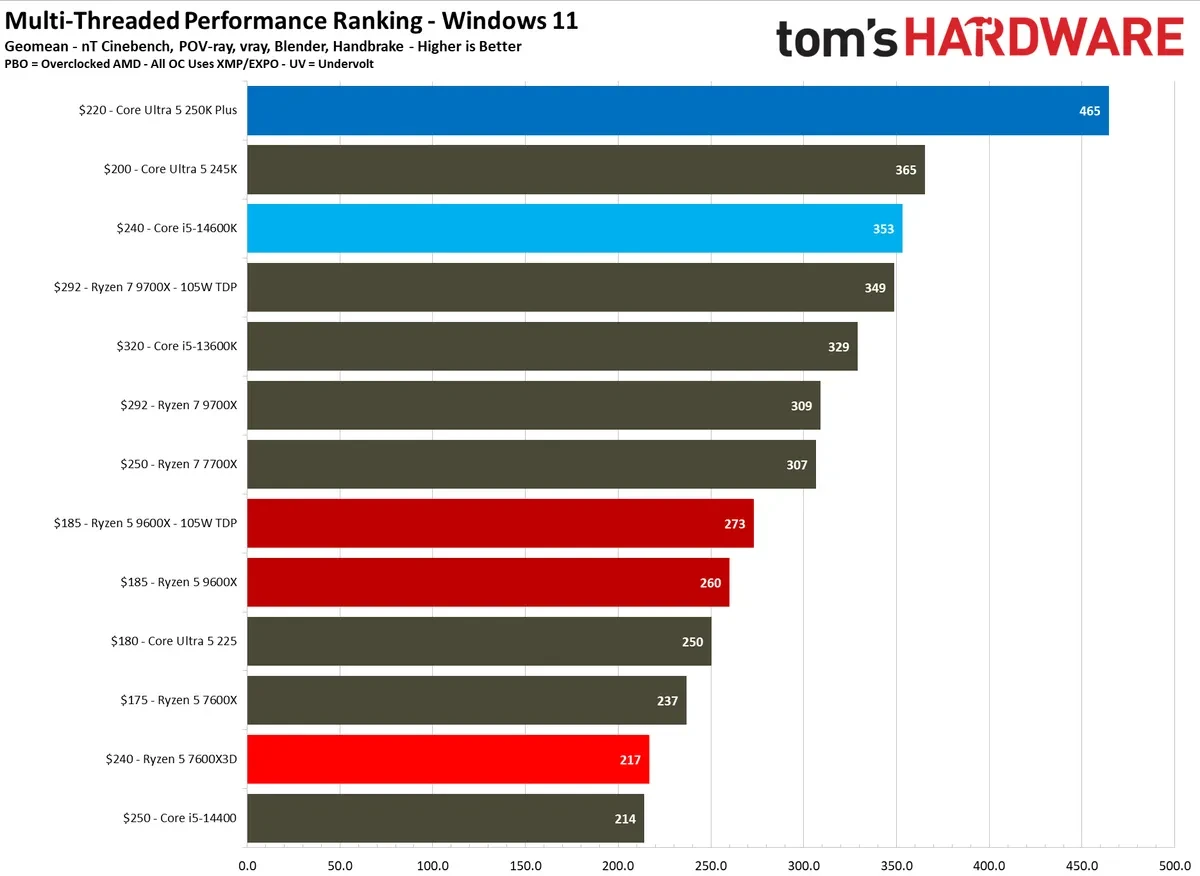
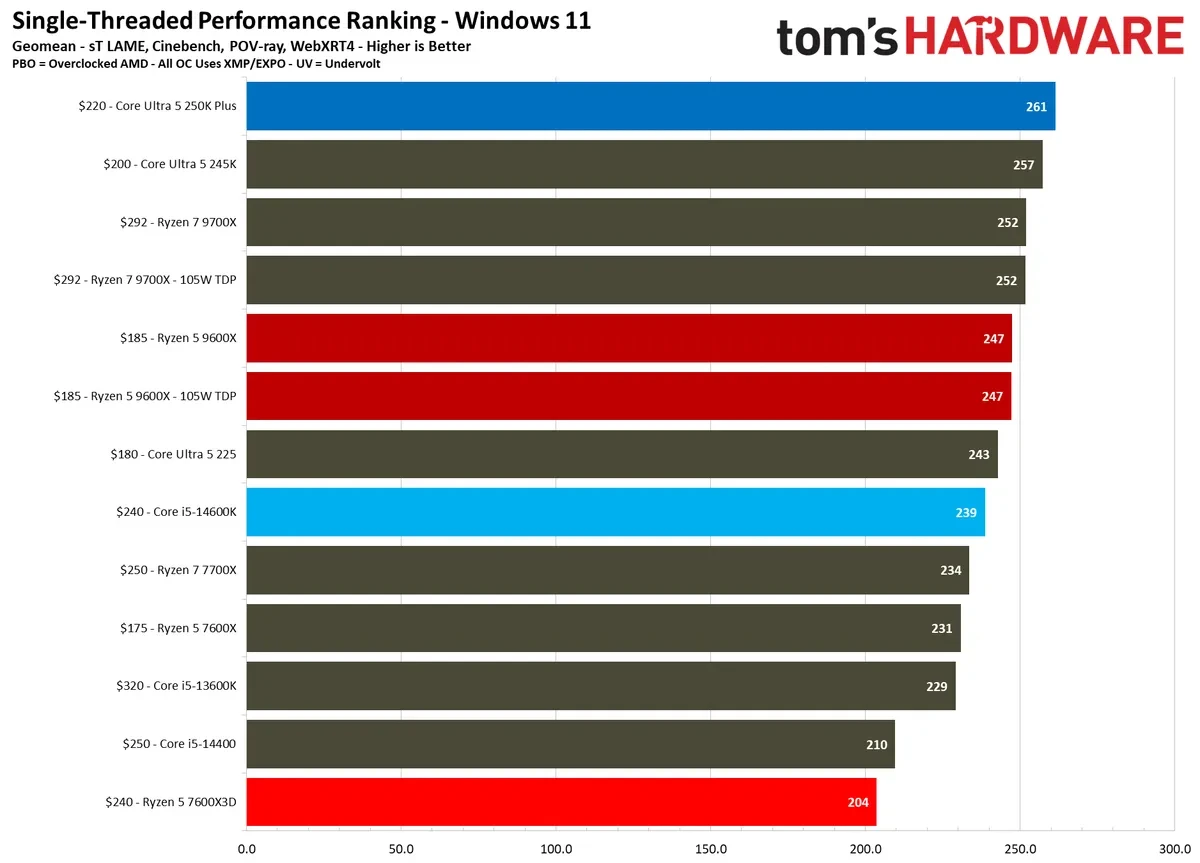
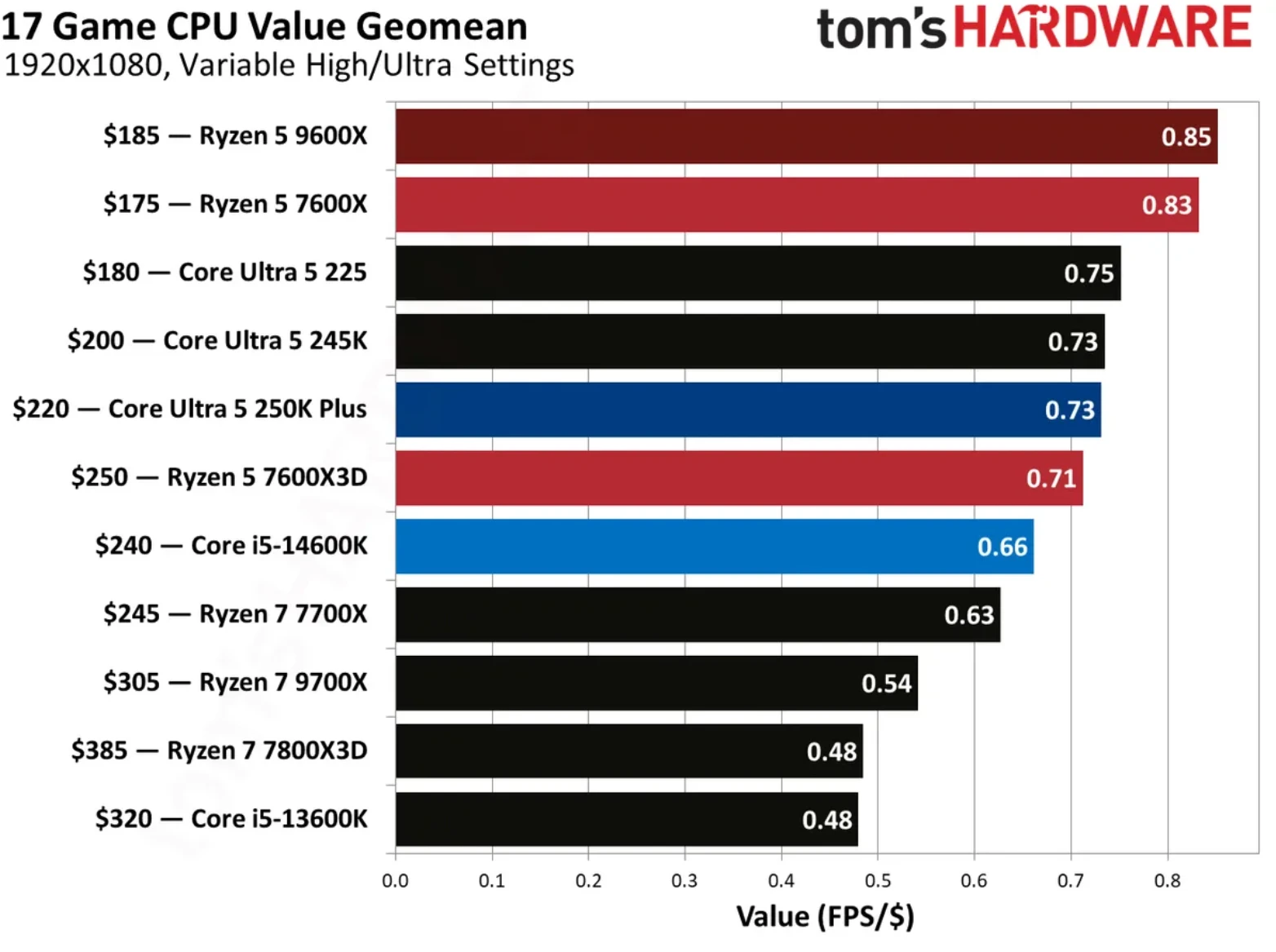
Despite its limitations outside gaming, Tom’s Hardware concluded that the Ryzen 5 7600X3D offers one of the best price-to-performance ratios currently available for gaming PCs.
The combination of near-flagship gaming performance and lower cost makes it particularly attractive for budget-conscious users building systems focused on high frame rates rather than productivity tasks.
Source: tomshardware.com