DLSS Multi Frame Generation 6X boosts performance in 4K tests
Enthusiast tester MxBenchmarkPC has evaluated NVIDIA’s DLSS Multi Frame Generation technology in its 6X mode across eight modern games, demonstrating significant performance gains at 4K resolution alongside increased input latency.
Test setup and methodology
The tests were conducted using a system equipped with an Intel Core i7-14700F processor, an Asus PRIME B760-PLUS D4 motherboard, and 32 GB of DDR4-3600 memory. Graphics performance was handled by an ASUS TUF Gaming RTX 5080 OC with 16 GB of VRAM.
All games were run at ultra settings, with path tracing enabled in select titles. The focus was on DLSS 4.5 and its Multi Frame Generation (MFG) feature, including the new 6X mode.
Performance gains across modern games
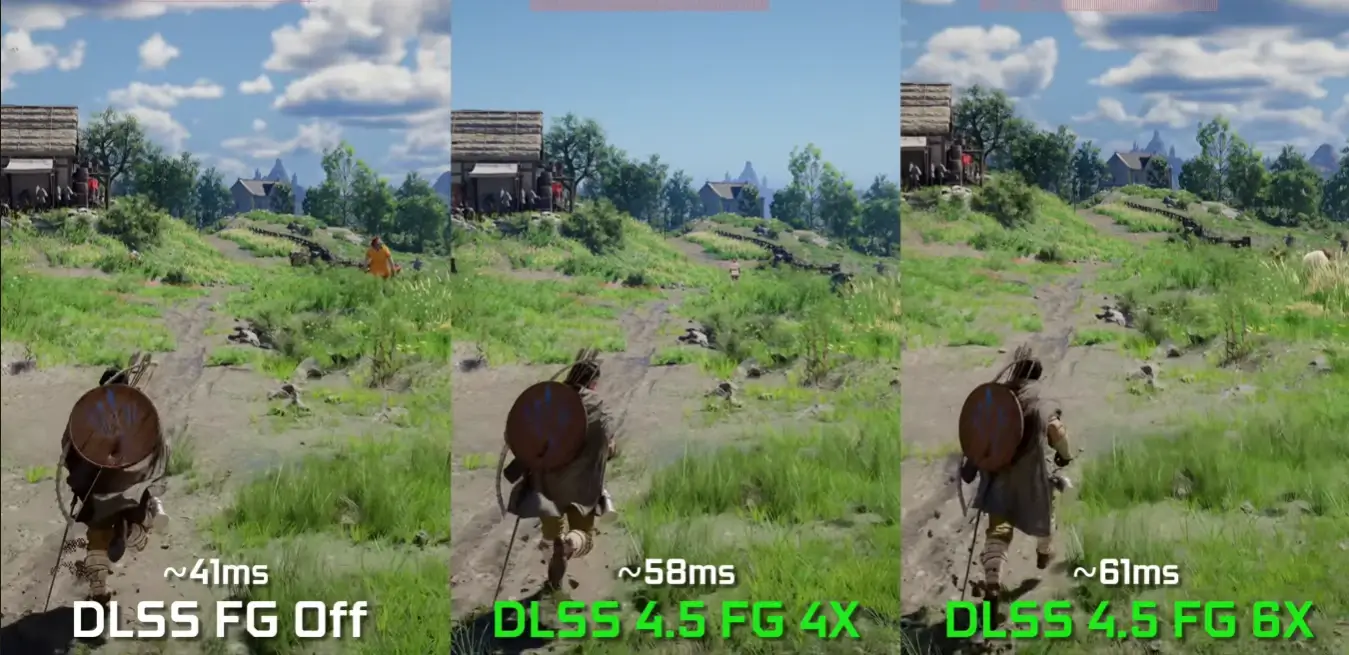
Results show that enabling multi-frame generation can dramatically increase frame rates. In Crimson Desert, performance rose from 60 FPS without MFG to 170 FPS in 4X mode and up to 220 FPS in 6X mode.
A similar pattern was observed in Cyberpunk 2077, where frame rates increased from 60 FPS to 170 FPS (4X) and 230 FPS (6X).
Other titles followed the same trend:
- Resident Evil Requiem: from 55 FPS to 210–220 FPS in 6X
- Death Stranding 2: from 75 FPS to 260 FPS
- S.T.A.L.K.E.R. 2, Black Myth: Wukong, DOOM: The Dark Ages, and Alan Wake 2 showed comparable scaling
Overall, DLSS 4.5 with multi-frame generation can increase performance by roughly three to four times in demanding 4K scenarios.
Latency impact and trade-offs
While performance gains are substantial, they come with a measurable increase in input latency.
For example, in Crimson Desert, latency rose from 41 ms without MFG to 58 ms in 4X mode and 61 ms in 6X mode. In Cyberpunk 2077, latency increased from 40 ms to 57 ms in 6X.
This pattern was consistent across all tested titles: higher frame rates were accompanied by higher latency, reflecting the computational overhead of generating additional frames.
What it means for DLSS 4.5
The results highlight the potential of DLSS 4.5’s Multi Frame Generation as a major performance multiplier for 4K gaming. However, the trade-off between smoother visuals and increased input delay remains a key consideration, particularly for latency-sensitive genres.
The 6X mode represents the most aggressive implementation so far, pushing frame rates to levels previously unattainable in ultra settings, but not without compromises.