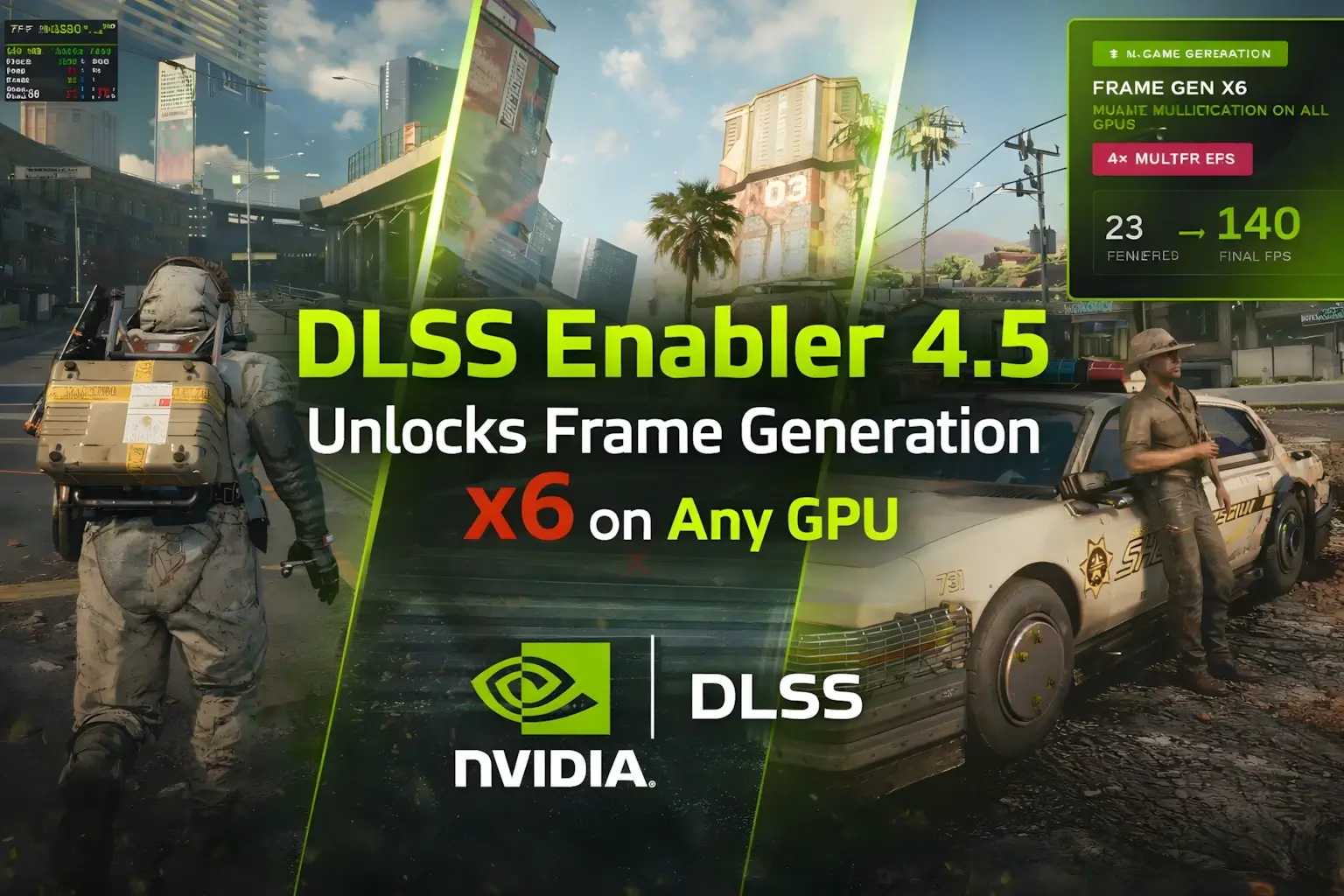
DLSS Enabler 4.5 Unlocks Frame Generation x6 on Unsupported GPUs
Sometimes, the most interesting breakthroughs in gaming technology don’t come from large corporations — they come from the community. DLSS Enabler is a perfect example of that. With its latest update, version 4.5.0.0, the tool quietly removes one of NVIDIA’s biggest limitations and opens access to multi-frame generation modes x5 and x6.
What makes this especially surprising is not just the feature itself, but where it works. We’re not talking only about newer GPUs — the tool extends these capabilities to older NVIDIA cards, as well as AMD Radeon and even Intel graphics solutions.
That alone shifts expectations around what modern hardware is truly capable of.
While unofficial tools can unlock features, NVIDIA also released an official update to its app, bringing NVIDIA App 11.0.7 Update: DLSS 4.5, Auto Shader Compilation & Key Improvements with AI frame generation and other key improvements.
Table of Contents
Breaking NVIDIA’s Official Limitations
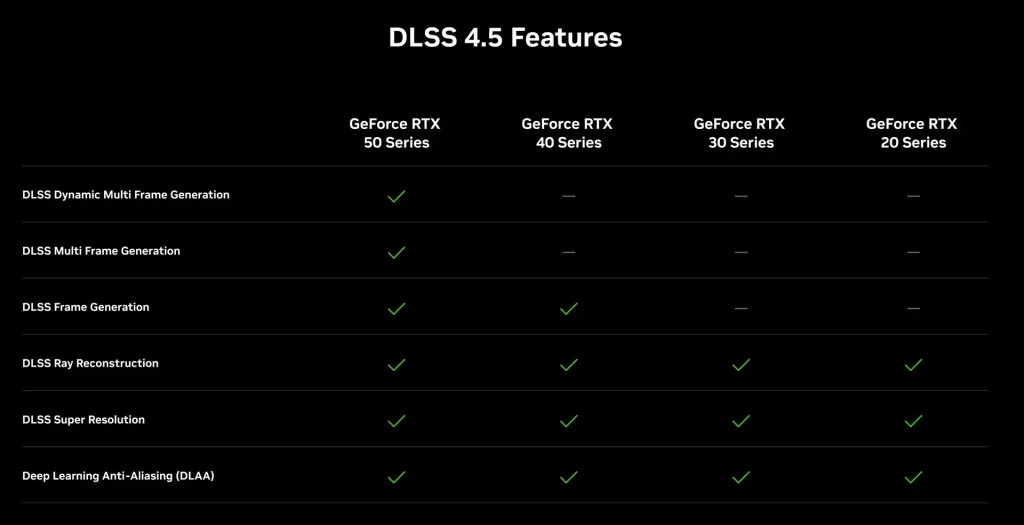
NVIDIA has been very deliberate in how it rolls out new technologies. Multi-Frame Generation beyond x3 is officially locked to the GeForce RTX 50 series, making it an exclusive feature designed to push hardware upgrades.
For users on RTX 40 or older GPUs, this effectively creates a hard ceiling — no matter how powerful the card is, certain features remain inaccessible.
DLSS Enabler challenges that model entirely. By introducing a workaround, enthusiasts have made it possible to unlock these advanced frame generation modes on unsupported hardware.
Even more interesting is the cross-vendor compatibility. The tool doesn’t stop at NVIDIA — it brings similar functionality to AMD and Intel GPUs, something NVIDIA’s ecosystem was never designed to support.
It’s not a perfect replication of the original technology, but it’s close enough to change how people think about GPU limitations.
How DLSS Enabler Actually Works
Despite its name, DLSS Enabler does not magically port native DLSS 4.5 Multi-Frame Generation onto unsupported GPUs.
Instead, it operates as a translation layer between the game engine and the graphics hardware. When DLSS Frame Generation isn’t available, the tool redirects the workload through alternative methods.
At the core of this approach is AMD’s FSR technology, specifically implemented through a middleware layer called OptiScaler.
In simple terms, the game believes it is using DLSS, while the system actually relies on FSR-based algorithms to generate additional frames.
This clever workaround is what makes x5 and x6 frame generation possible across a wide range of hardware — even where it was never intended to run.
Technical Improvements and Performance Details
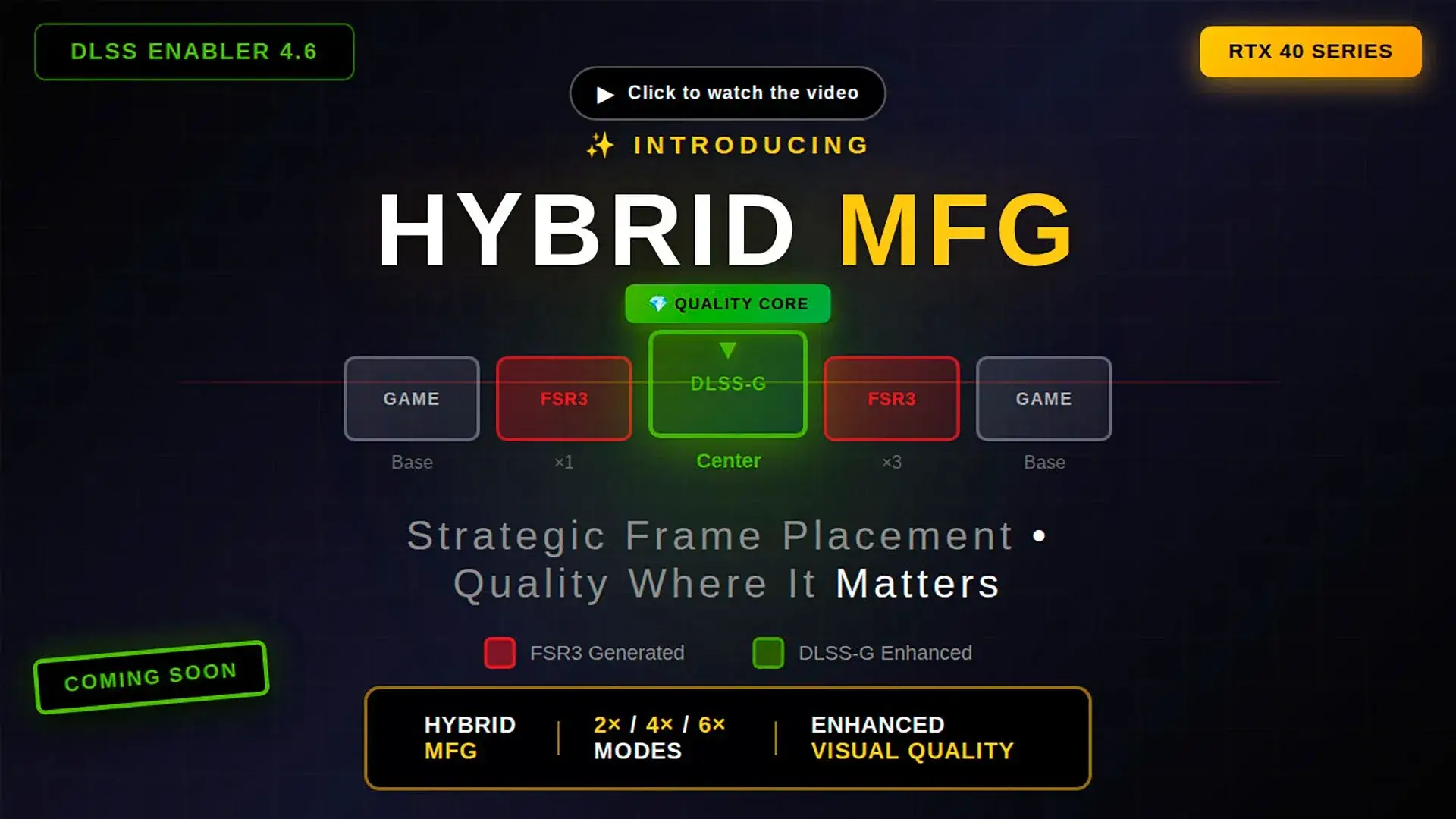
The 4.5.0.0 update isn’t just about unlocking new multipliers — it also improves how the tool operates under the hood.
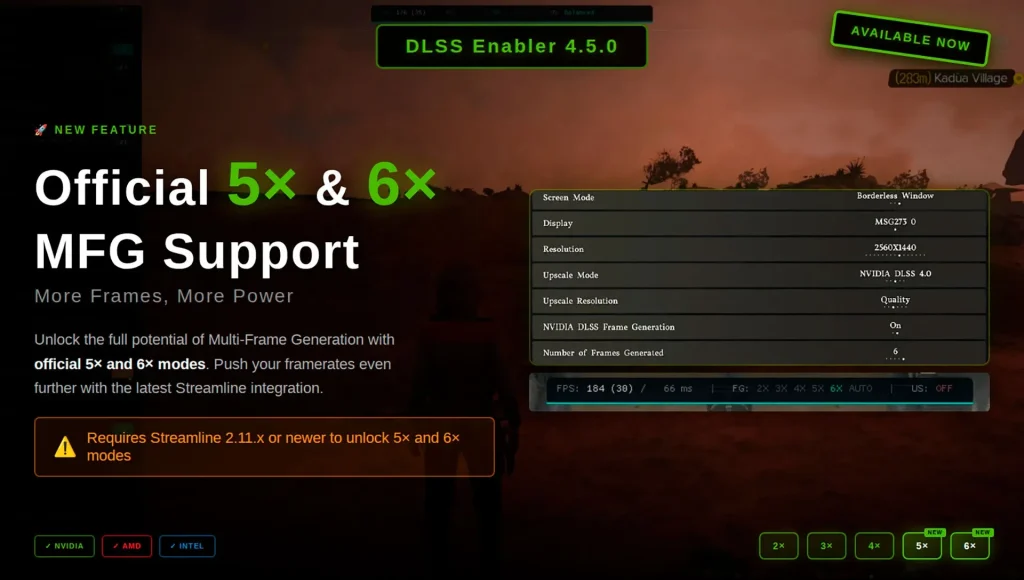
Previous versions of DLSS Enabler had already transitioned from FSR 3.0 to FSR 3.1, bringing noticeable gains in stability and frame pacing. The latest build builds on that foundation with further refinements.
One of the key additions is support for DP4A instructions, which help optimize performance on compatible GPUs. This allows the system to process frame generation tasks more efficiently, reducing overhead and improving consistency.
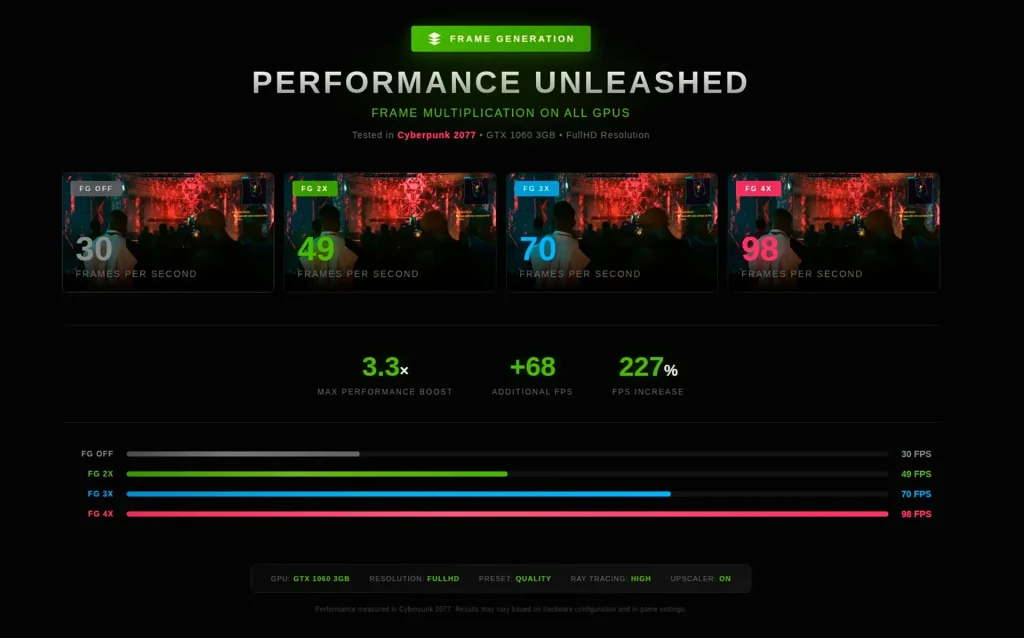
However, setup still requires some manual attention. Users need to ensure that Streamline 2.11 files are present in the game directory, and in some cases, frame generation modes must be enabled manually if the game UI doesn’t expose them.
So while the tool is powerful, it’s not entirely plug-and-play.
What This Means for the Future of Frame Generation
Tools like DLSS Enabler are more than just technical curiosities — they highlight a growing gap between what hardware can do and what manufacturers allow it to do.
When the community consistently finds ways to bypass artificial limitations, it sends a clear signal to the industry. Users want flexibility, and they’re willing to experiment to get it.
This is where Intel enters the conversation. There is increasing speculation that Intel may be working on a more universal frame generation solution — one that doesn’t lock features behind specific GPU lineups.
If that happens, it could fundamentally reshape how these technologies evolve.
For now, DLSS Enabler stands as a powerful demonstration of what’s possible. Just keep in mind that using such tools in multiplayer games can be risky, as modifying game files may result in account bans.
In single-player scenarios, however, it opens the door to experimentation — and to performance levels that previously seemed out of reach.