

How to Start SEO for AdSense: Beginner’s Guide to Real Earnings
Recently I watched how big bloggers on X pull in thousands of dollars a month with AdSense. As someone just getting started, I kept asking the same questions you’re probably asking right now: Is SEO really the way to make that happen on my own site? And how exactly do you begin?
The short answer is yes—SEO is the foundation. If you plan to monetize with AdSense, organic traffic is what actually pays the bills. Paid ads can bring visitors quickly, but SEO delivers steady, high-quality traffic that keeps earning long after the ad budget runs out.
Table of Contents
What Is SEO and Why It Matters for Making Money Online
SEO stands for Search Engine Optimization. At its core, it’s about helping search engines understand your content so they send you the right visitors without you paying for every click.
For AdSense earnings, SEO matters because traffic equals revenue. Without visitors, even the best ad placements earn nothing. The good news? Once you rank, that traffic is essentially free and far more likely to click ads than traffic from other sources.
How Beginners Choose Keywords to Actually Earn
Keywords are the main on-ramp for traffic. They fall into two big categories: popular high-volume keywords and long-tail keywords. Most beginners chase the flashy ones like “SEO tools” or “website optimization,” only to get crushed by massive sites like Ahrefs, Semrush, Moz, and Forbes.
That’s where long-tail keywords become your secret weapon.
Long-Tail Keywords: The Smart Survival Strategy for New Sites
Long-tail keywords are longer, more specific phrases with lower search volume but much clearer user intent. They’re easier to rank for, convert better, and work beautifully for brand-new or small sites.
Popular Keywords vs. Long-Tail Keywords – What the Data Shows
Here’s a clear side-by-side look at how they stack up:
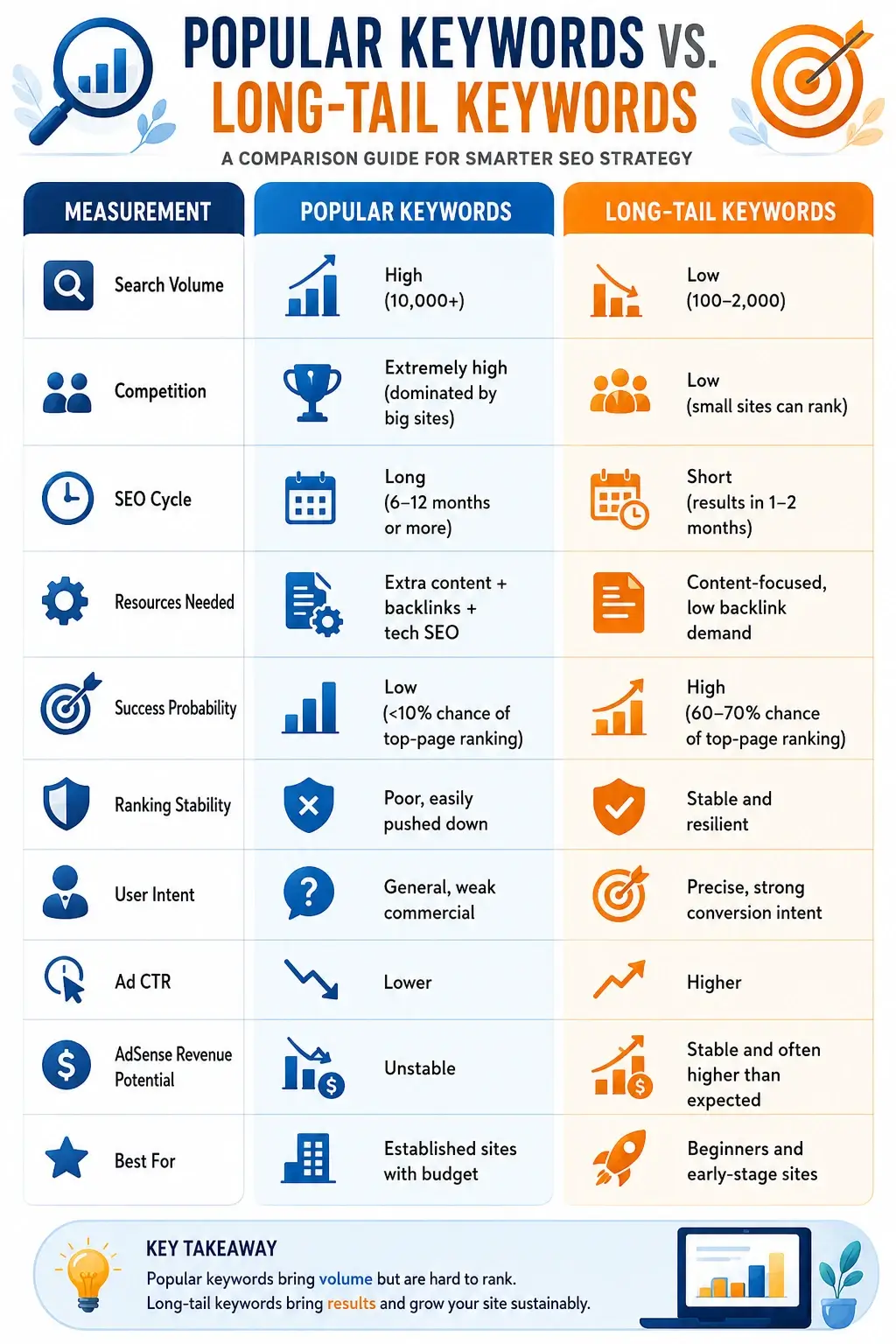
The takeaway is simple: long-tail keywords give beginners a realistic path to ranking, traffic, and AdSense income.
How to Find Keywords Using Three Proven Tools
Forget guessing. Combine Google Trends, Ahrefs, and Google’s own suggestions for reliable results.
Traditional methods chase high-volume keywords on gut feel and take forever. The smarter approach targets low-competition long-tails, double-checks with data, and sees results in weeks instead of months.
Google Trends: Mining Trending Long-Tail Ideas
Start at Google Trends and enter a seed keyword. Filter by region, time period, category, and source. Scroll to the bottom for “related queries.”
Expert tip: Skip anything under 200. Focus on breakouts or terms rising over 1,000% for the best opportunities.
For example, searching “pixel art converter” shows steady historical popularity—useful context when deciding whether competition might be too tough.
Validating Keywords Fast with Ahrefs
Plug your idea into Ahrefs’ keyword generator. You’ll get a list of related phrases and questions with keyword difficulty (KD), monthly search volume, and last-update date.
This quick check tells you exactly which long-tail variations are worth writing about.
Google’s Own Suggestions and “People Also Ask”
Type your keyword into the Google search bar and watch autocomplete suggestions appear. Scroll down to the “People also ask” box for real questions users are typing. These are pure gold for long-tail content ideas.
How to Use These Keywords on Your Site
Once you have solid keywords, put them to work strategically.
- Domain Name Choice Pick something relevant and clean.
- Bad: best-seo-tools-for-website-optimization-2024.com (keyword stuffing)
- Good: seotools.guide (short, clear, includes the topic)
- Keyword Placement Strategy Based on real testing, here’s the weight distribution that actually moves the needle:
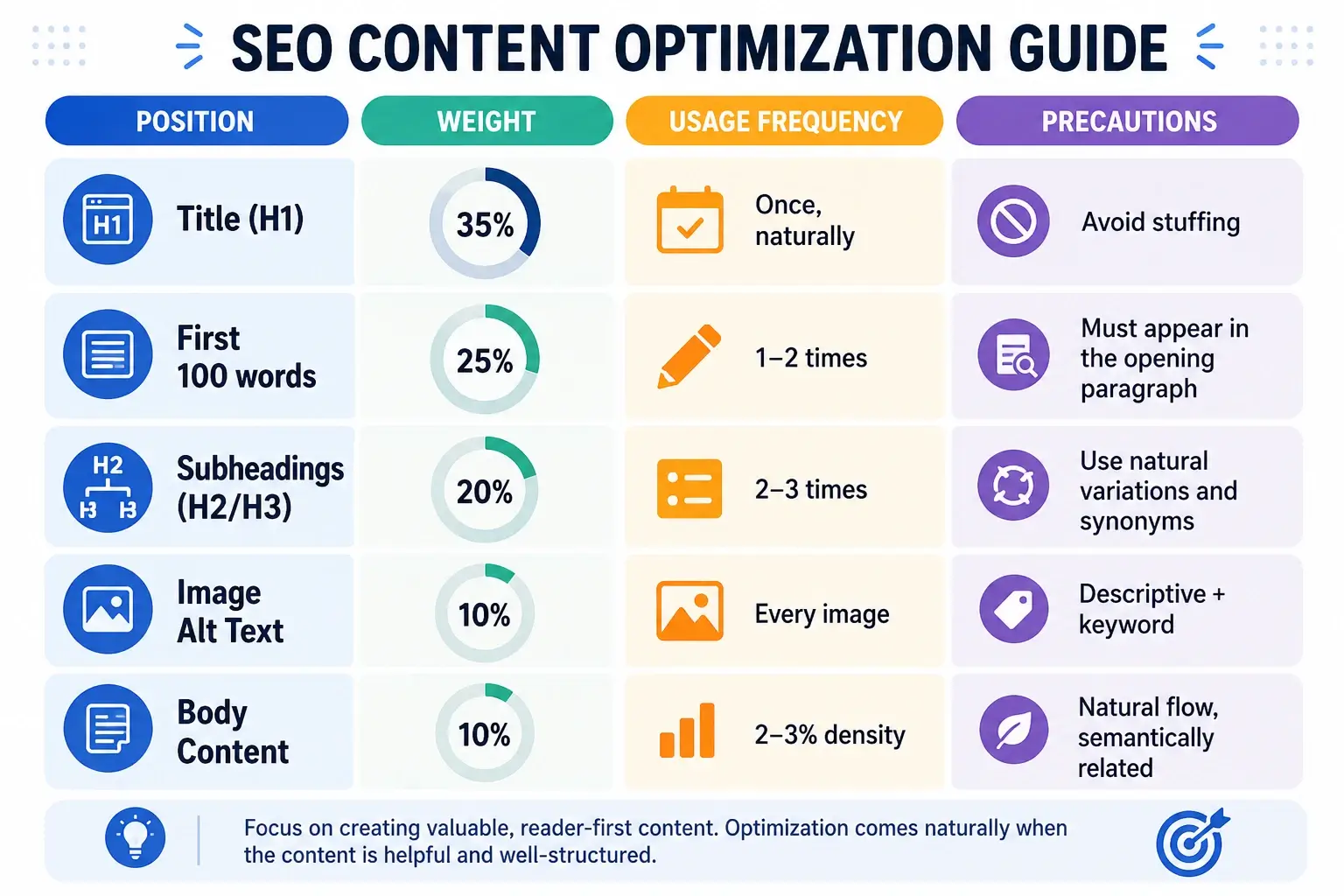
Quick tips:
- Submit to Google Search Console After publishing, submit your sitemap and individual URLs. Make sure pages load fast and aren’t duplicated. Manual submission of your most important pages is highly recommended—indexed content often appears within 24 hours.
Common SEO Mistakes That Kill Beginner Progress
- The Road Trap: Chasing only high-volume keywords and getting buried by giants.
- Hard-Plug Keywords: Forcing exact phrases into sentences until the article reads like spam.
- Blind SEO Optimization: Ignoring Google’s E-E-A-T signals (Experience, Expertise, Authoritativeness, Trustworthiness). In the AI era, user experience and genuine quality content matter more than ever.
Recommended Tools to Make SEO Easier
| Tool Type | Free Option | Paid Option |
|---|---|---|
| Keyword Research | Google Keyword Planner | Ahrefs |
| Ranking Monitoring | Google Search Console | Semrush |
| Technical SEO | PageSpeed Insights | Screaming Frog |
| Content Optimization | Google Trends | Surfer SEO |
Start with the free tools and add paid ones as you grow.
Achieving that steady, high-quality traffic foundational for AdSense success often involves understanding how to build SEO Authority Explained: How backlinks strengthen your website through trust and relevance.
Why SEO Remains an Evergreen Skill for AdSense Earnings
To me, SEO isn’t just a temporary tactic—it’s a lasting ability. Even as AI changes how we create content, people still search for information, and search engines still reward well-optimized sites. The medium might shift to video or podcasts, but the need to help content stand out will always be there.
I’m still in the early stages of learning SEO myself, and this article captures my real process from zero. I hope it becomes the first solid stepping stone in your own journey toward website optimization and steady AdSense income.
I’ll be sharing more practical tools, keyword strategies, and planning tips in future posts. Bookmark this blog, subscribe, and let’s keep improving together.
Source: ypplog.cn




Saved as a favorite, I really like your blog!
This is very interesting, You’re a very skilled blogger.
I’ve joined your rss feed and look forward to seeking
more of your great post. Also, I’ve shared your site in my social networks!
What’s up colleagues, its impressive paragraph regarding teachingand completely defined, keep it up all the time.
my web site Seo freelancers
Right away I am ready to do my breakfast, afterward having my breakfast coming yet again to read further
news.
I got this website from my pal who told me concerning this site and at the
moment this time I am browsing this website and reading
very informative articles or reviews at this time.
great points altogether, you simply gained a new reader.