
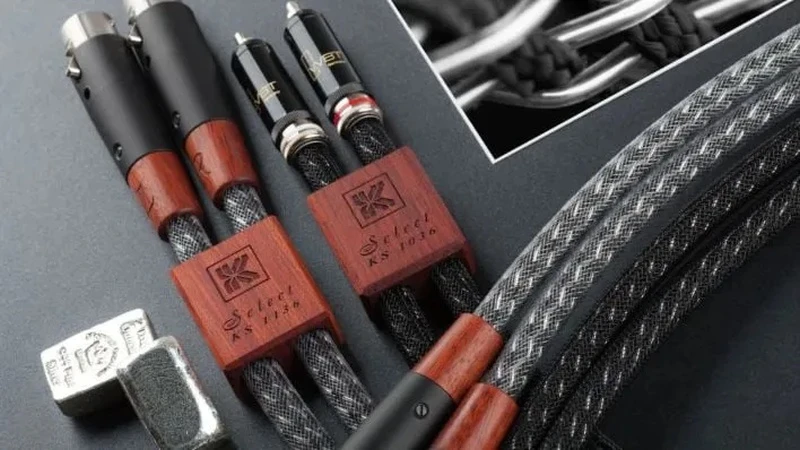
Audio Cable Blind Test: What a $4250 Cable Really Gets You
There’s something almost irresistible about the promise of “better sound.” If you’ve ever browsed high-end audio gear, you’ve likely seen cables priced like luxury accessories—sometimes costing more than the equipment they connect. The implication is subtle but powerful: better materials, better engineering, better listening experience.
But what happens when those claims are tested without bias?
A recent audio cable blind test conducted by Audio Science Review offers a rare moment of clarity in an industry often driven by subjective impressions. And the results? They’re about as grounded—and revealing—as you might expect.
Table of Contents
The Myth of Premium Audio Cables
The high-end audio world thrives on nuance. It’s a space where tiny details are often elevated into transformative features. Manufacturers talk about silver-plated conductors, exotic materials, and even construction techniques that sound closer to aerospace engineering than audio design.
The promise is that these elements somehow reshape sound—adding depth, clarity, or even a sense of “air” around instruments. Jazz pianos become more dimensional, saxophones more textured, recordings more alive.
But here’s the problem: most of these claims are incredibly difficult to verify objectively.
Because sound perception is inherently subjective, it becomes fertile ground for expectation bias. When someone spends thousands on a cable, they don’t just want to hear a difference—they expect to.
Inside the Blind Test: $4250 vs $7
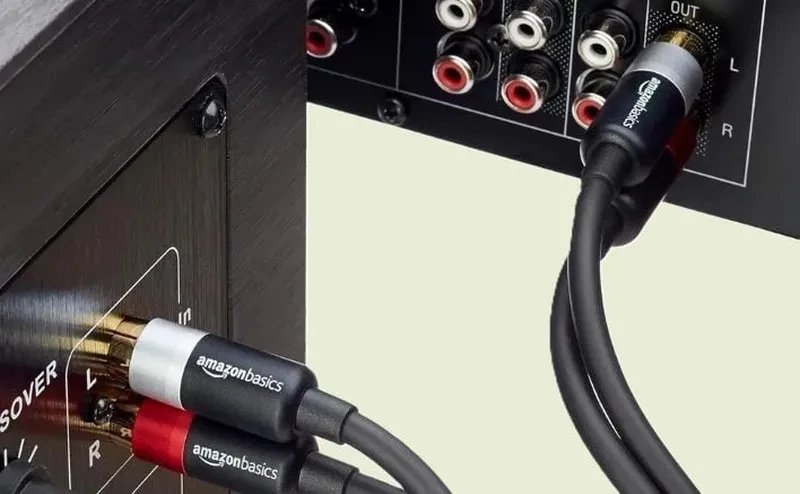
To strip away bias, the test compared two drastically different products:
- A Kimber Kable Select KS-1136, priced at $4250
- A basic Amazon Basics RCA cable, costing just $7.19
The goal was simple: evaluate whether the expensive cable actually performs better when measured objectively.
No branding influence. No expectations. Just raw data.
And almost immediately, things got interesting.
What the Measurements Actually Show
The results were striking—not because of dramatic differences, but because of how little difference there was.
According to the test data, both cables performed virtually identically across all meaningful metrics.
This included:
- Frequency response
- Phase shift
- Square wave transmission
- Overall signal integrity
In fact, the expensive Kimber cable didn’t just fail to outperform the cheaper one—it actually showed slightly higher susceptibility to electrical interference in certain conditions.
The only measurable distinction? A tiny increase in jitter on the Amazon cable. But even that came with an important caveat: it was likely caused by the cable being longer, not inherently worse.
In practical terms, the difference was negligible—far beyond what any human listener could realistically detect.
Marketing vs Physics in Audio Equipment
This is where things get uncomfortable for the high-end audio industry.
Because while marketing language might suggest that cables can dramatically reshape sound, physics tells a much simpler story. Audio signals—especially over short distances like typical home setups—don’t behave in mysterious ways just because the cable is more expensive.
A cable’s job is straightforward: transmit an electrical signal from one device to another without significant loss or distortion. As long as it meets basic quality standards, it does exactly that.
No magic. No hidden dimension.
The Kimber cable, despite its premium positioning and elaborate terminology, didn’t break those rules. It followed them—just like the $7 alternative.
The Placebo Effect in Audiophile Culture
So why do people still believe in dramatic cable differences?
Part of the answer lies in the placebo effect.
When listeners expect improvement, their brains often fill in the gaps. Subtle variations—real or imagined—become amplified. Over time, these perceptions solidify into beliefs, reinforced by community discussions and marketing narratives.
Some audiophiles even describe hearing hyper-specific details—like the texture of breath in a saxophone performance. But when tested blindly, those distinctions tend to disappear.
That doesn’t mean people are lying. It means perception is deeply influenced by context.
And in audio, context is everything.
What This Means for Your Setup
If you’re building or upgrading your audio system, this test offers a refreshingly practical takeaway:
Spending thousands on cables is unlikely to improve your listening experience.
In fact, the study suggests something far more useful—your money is better spent elsewhere. Better speakers, improved room acoustics, or higher-quality source material will have a far greater impact on sound than any cable upgrade.
Even ergonomics came into play. The expensive Kimber cable featured a locking mechanism that could potentially damage equipment if handled incorrectly, along with internal components described as less robust than those in the budget cable.
So not only did it fail to outperform—it introduced new drawbacks.
At the end of the day, the conclusion is almost refreshingly simple.
A cable’s purpose isn’t to enhance sound—it’s to not degrade it. And once that baseline is met, spending more doesn’t necessarily buy you anything audible.
Sometimes, the most surprising result is the one that confirms common sense.
Source: hothardware.com