Best Open World PC Games With Character Creation explores immersive RPGs and sandbox adventures where players can build unique characters and shape their own stories.
ISPs don’t need to break encryption to detect VPNs—they rely on metadata, traffic patterns, and DPI. While your data stays private, the mere use of a VPN is often clearly visible and increasingly easy to identify.
The audio cable blind test confirms what physics already suggests—expensive cables don’t improve sound quality. Measurable differences are negligible, making budget options just as effective for real-world listening setups.
In 2026, a budget gaming CPU still delivers solid 60 FPS performance if paired correctly. Proven options like Ryzen 5 5600 or Core i5-12400F offer the best balance of price, efficiency, and real-world gaming results.
AI-generated music is rapidly overwhelming streaming platforms, forcing companies to rethink detection, fairness, and monetization. As AI tracks grow in volume and quality, the industry faces rising fraud risks, blurred authenticity, and urgent demand for transparent labeling.
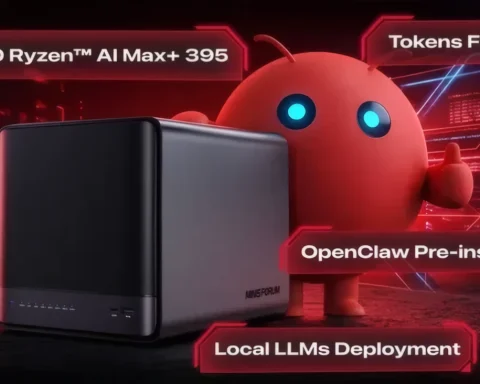
The Minisforum AI NAS N5 Max pushes NAS beyond storage, combining a 16-core Ryzen AI CPU, fast memory, and massive capacity into a hybrid system built for local AI workloads, high-speed networking, and advanced home or small business servers.
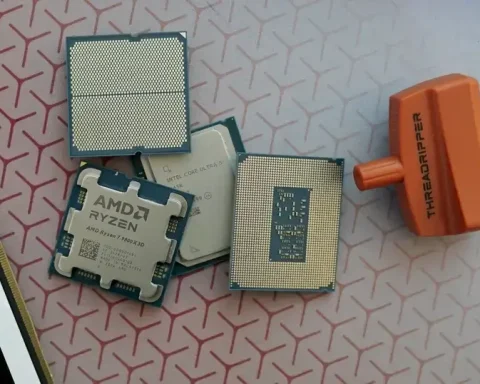
The Best Gaming Processors 2026 ranking shows a clear shift: AMD dominates high-end gaming performance with strong value, while Intel focuses on competitive mid-range options, giving gamers more balanced choices than ever.
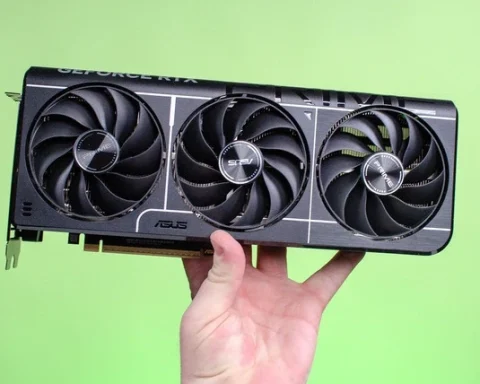
TechRadar’s 2026 GPU ranking shows a clear shift: 8GB VRAM is no longer enough. Modern games and AI workloads demand 10–32GB, making newer AMD, NVIDIA, and Intel cards far more future-proof choices.
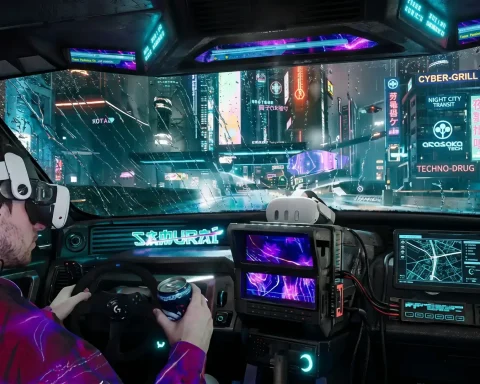
A Cyberpunk 2077 fan created a virtual studio in Unreal Engine, recreating the Quadra V-Tech interior with VR control, AI voice assistant, and OBS/NDI integration
The article explores how neural networks are transforming medicine—from diagnostics and drug discovery to robotic surgery—highlighting real-world results, current limitations, and what the future of AI in healthcare may look like.